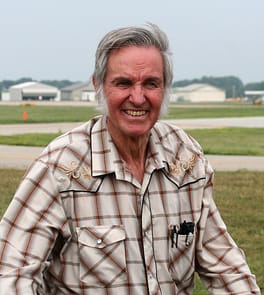
Photo: Steve Paluch / CC BY-SA 3.0 (source: Wikimedia Commons)
Burt Rutan was born in Estacada, Oregon, United States on June 17, 1943. Burt Rutan is listed as a military flight engineer, inventor and aircraft pilot. The age as of 2026 is 83. Education on record includes California Polytechnic State University. Recorded honors include Presidential Citizens Medal, Daniel Guggenheim Medal (2011), National Aviation Hall of Fame (1995) and 4 more.
My Take
Burt Rutan strikes me as a genuine original, the rare engineer whose aircraft look as radical as the ideas behind them. The Voyager flying around the world nonstop and unrefueled in 1986 still sounds borderline impossible, and that single feat would have made a career. But the wall of honors, the National Aviation Hall of Fame, the Daniel Guggenheim Medal, the Presidential Citizens Medal, tells me he kept pushing boundaries for decades. What I admire most is the obsession with light, efficient, unconventional design. From small-town Oregon and Cal Poly, he became someone who genuinely reshaped how people imagine flight, both atmospheric and beyond.
This take was written by generative AI, one per person, from publicly reported facts (editorial policy). It is a reading of the record, not reporting.
1. Profile
- Name (English)
- Burt Rutan
- Name (Japanese)
- バート・ルータン
- Reading
- ばーと・るーたん
- Born
- June 17, 1943 (age 83)
- Origin
- Estacada, Oregon, United States
- Occupation
- military flight engineer / inventor / aircraft pilot / entrepreneur / engineer
- Zodiac / Chinese zodiac
- Gemini / Goat
2. Background
- University
- California Polytechnic State University
Awards & achievements
- Presidential Citizens Medal
- 2011 Daniel Guggenheim Medal
- 1995 National Aviation Hall of Fame
- 2007 honorary doctorate of the Vrije Universiteit Brussel
- 2005 J. C. Hunsaker Award in Aeronautical Engineering
- 2007 NSS Wernher Von Braun Memorial Award
- 2015 Wright Brothers Memorial Trophy
3. Links
- Official sitehttps://www.burtrutan.com/
- Wikipedia (English)https://en.wikipedia.org/wiki/Burt%20Rutan
- Wikipedia (Japanese)https://ja.wikipedia.org/wiki/%E3%83%90%E3%83%BC%E3%83%88%E3%83%BB%E3%83%AB%E3%83%BC%E3%82%BF%E3%83%B3
- Wikidatahttps://www.wikidata.org/wiki/Q453046
4. About this entry
Tags
- Last updated
Facts are limited to publicly available information up to 2024; non-public or unconfirmed items are omitted. English text is machine-assisted (facts translated by Sonnet, "My Take" written by Opus 4.8). The Japanese page is the source of record.
Frequently asked questions
When was Burt Rutan born?
Born June 17, 1943 (age 83).
Where is Burt Rutan from?
Burt Rutan is from Estacada, Oregon, United States.
What does Burt Rutan do?
Burt Rutan works as military flight engineer, inventor, aircraft pilot, entrepreneur, engineer.
Military flight engineer — see all → · Inventor — see all → · More people from the United States →