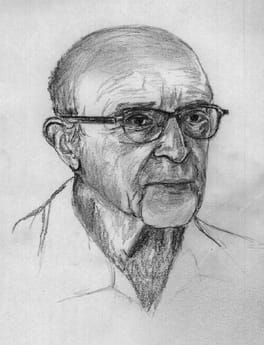
Photo: The original uploader was Didius at Dutch Wikipedia. / CC BY 2.5 (source: Wikimedia Commons)
Carl Rogers, born on January 8, 1902 in Oak Park, Illinois, United States, was a psychotherapist, psychologist and non-fiction writer. Carl Rogers died on February 4, 1987, aged 85. Schooling on record includes University of Wisconsin–Madison. Awards on record include Humanist of the Year (1964), APA Award for Distinguished Scientific Contributions to Psychology (1962), Fellow of the American Academy of Arts and Sciences and 1 more.
My Take
Carl Rogers is a figure I hold in quiet reverence. As a founder of humanistic psychology and the architect of person-centered therapy, he reframed the entire relationship between helper and helped, trusting the client's own capacity for growth rather than dictating from authority. What strikes me most is the radical kindness embedded in his theory: unconditional positive regard is harder to practice than any technique. The APA honored his research, but his deeper legacy is cultural, shaping how millions are listened to. He proved warmth could be rigorous, and that empathy itself could be a discipline.
This take was written by generative AI, one per person, from publicly reported facts (editorial policy). It is a reading of the record, not reporting.
1. Profile
- Name (English)
- Carl Rogers
- Name (Japanese)
- カール・ロジャーズ
- Reading
- かーる・ろじゃーず
- Born
- January 8, 1902 – February 4, 1987
- Origin
- Oak Park, Illinois, United States
- Occupation
- psychotherapist / psychologist / non-fiction writer / film producer / university teacher
- Zodiac / Chinese zodiac
- Capricorn / Tiger
2. Background
- University
- University of Wisconsin–Madison
Awards & achievements
- 1964 Humanist of the Year
- 1962 APA Award for Distinguished Scientific Contributions to Psychology
- Fellow of the American Academy of Arts and Sciences
- 1975 Honorary doctor of Leiden University
3. Links
- Official sitehttp://www.nrogers.com/index.html
- Wikipedia (English)https://en.wikipedia.org/wiki/Carl%20Rogers
- Wikipedia (Japanese)https://ja.wikipedia.org/wiki/%E3%82%AB%E3%83%BC%E3%83%AB%E3%83%BB%E3%83%AD%E3%82%B8%E3%83%A3%E3%83%BC%E3%82%BA
- Wikidatahttps://www.wikidata.org/wiki/Q191004
4. About this entry
Tags
- Last updated
Facts are limited to publicly available information up to 2024; non-public or unconfirmed items are omitted. English text is machine-assisted (facts translated by Sonnet, "My Take" written by Opus 4.8). The Japanese page is the source of record.
Frequently asked questions
When was Carl Rogers born?
Carl Rogers was born on January 8, 1902.
When did Carl Rogers die?
Carl Rogers died on February 4, 1987, aged 85.
Where was Carl Rogers from?
Carl Rogers was from Oak Park, Illinois, United States.
What did Carl Rogers do?
Carl Rogers worked as psychotherapist, psychologist, non-fiction writer, film producer, university teacher.
Where did Carl Rogers study?
Carl Rogers attended University of Wisconsin–Madison.
Psychologist — see all → · More people from the United States → · More people born on January 8 →