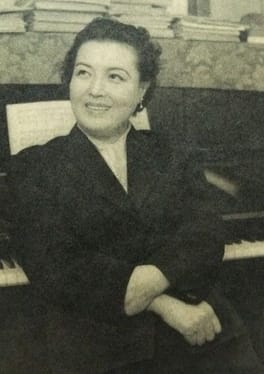
Photo: 朝日新聞社 / Public domain (source: Wikimedia Commons)
My Take
Born in Otaru, Hokkaido — a port town with real atmosphere — and trained at Tokyo Music University, Chiyoko Kobayashi was clearly the real deal, a formally schooled singer at a time when that path took serious grit. Coming into the world in 1910, she lived through the full sweep of prewar, wartime, and postwar Japan, which means basically everything: the roaring Taisho optimism, the militarist spiral, the devastation, the rebuilding. For a woman to carve out a career as a singer through all of that required not just talent but a kind of stubbornness I find genuinely admirable. She passed in 1976, so most of what she left behind is now archival territory, but there's something quietly cinematic about a girl from a snowy northern harbor city heading south to study music and making it her life's work. I wish we knew more of the details.
This take was written by generative AI, one per person, from publicly reported facts (editorial policy). It is a reading of the record, not reporting.
Overview
Chiyoko Kobayashi (1910–1976) was a Japanese singer born in Otaru, Hokkaido. She received formal musical training at Tokyo College of Music, establishing her as a classically grounded vocalist. Active during the Taisho and Showa eras, she pursued a singing career at a time when few women did so professionally. She passed away on November 25, 1976.
1. Profile
- Name (English)
- Chiyoko Kobayashi
- Name (Japanese)
- 小林千代子
- Reading
- こばやし ちよこ
- Born
- July 30, 1910 – November 25, 1976
- Origin
- Otaru, Hokkaido, Japan
- Occupation
- Singer
- Zodiac / Chinese zodiac
- Leo / Dog
2. Background
- University
- Tokyo College of Music
3. Links
4. About this entry
Tags
- Last updated
Only publicly available facts are listed; non-public or unconfirmed items are omitted. Base data was compiled from Wikidata from June 2026 onward; ages are recalculated daily and deaths are checked against Wikidata on an ongoing basis. English text is machine-assisted (facts translated by Sonnet, "My Take" written by Opus 4.8). The Japanese page is the source of record.
Frequently asked questions
When was Chiyoko Kobayashi born?
Chiyoko Kobayashi was born on July 30, 1910.
When did Chiyoko Kobayashi die?
Chiyoko Kobayashi died on November 25, 1976, aged 66.
Where was Chiyoko Kobayashi from?
Chiyoko Kobayashi was from Otaru, Hokkaido, Japan.
What did Chiyoko Kobayashi do?
Chiyoko Kobayashi worked as Singer.
Where did Chiyoko Kobayashi study?
Chiyoko Kobayashi attended Tokyo College of Music.
Singer — see all → · More people from Japan → · More people born on July 30 →