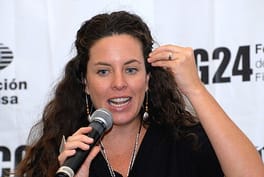
Photo: Festival Internacional de Cine en Guadalajara / CC BY 2.0 (source: Wikimedia Commons)
Born on November 15, 1976, Claudia Llosa is from Lima, Lima Department, Peru. Claudia Llosa is credited as a film director, screenwriter and film producer. The age as of 2026 is 49. Education on record includes University of Lima. Awards on record include Grand Officer of the Order of the Sun of Peru (2009), Golden Bear (2009) and Teddy Award (2012).
My Take
Claudia Llosa is one of the few directors I'd call a true author, and her Golden Bear for The Milk of Sorrow felt fully earned. She translates Peru's wounds, civil war trauma written onto a woman's body, into a cinematic language the world can feel without flattening it. Fever Dream showed she'll keep dissolving the line between dream and reality rather than playing it safe for the market. That refusal to court easy commercial appeal, paired with a Lima University intellect, gives her work a rare spine. She's a filmmaker I follow on principle, and I expect her next project to matter.
This take was written by generative AI, one per person, from publicly reported facts (editorial policy). It is a reading of the record, not reporting.
1. Profile
- Name (English)
- Claudia Llosa
- Name (Japanese)
- クラウディア・リョサ
- Reading
- くらうでぃあ・りょさ
- Born
- November 15, 1976 (age 49)
- Origin
- Lima, Lima Department, Peru
- Occupation
- film director / screenwriter / film producer
- Zodiac / Chinese zodiac
- Scorpio / Dragon
2. Background
- University
- University of Lima
Awards & achievements
- 2009 Grand Officer of the Order of the Sun of Peru
- 2009 Golden Bear
- 2012 Teddy Award
3. Works & records
Filmography / notable works
| Category | Title |
|---|---|
| Notable work | The Milk of Sorrow |
| Notable work | Fever Dream |
| Notable work | Madeinusa |
4. Links
5. About this entry
Tags
- Last updated
Facts are limited to publicly available information up to 2024; non-public or unconfirmed items are omitted. English text is machine-assisted (facts translated by Sonnet, "My Take" written by Opus 4.8). The Japanese page is the source of record.
Frequently asked questions
When was Claudia Llosa born?
Born November 15, 1976 (age 49).
Where is Claudia Llosa from?
Claudia Llosa is from Lima, Lima Department, Peru.
What does Claudia Llosa do?
Claudia Llosa works as film director, screenwriter, film producer.
What is Claudia Llosa known for?
Notable works include The Milk of Sorrow, Fever Dream, Madeinusa.
Film director — see all → · Screenwriter — see all → · More people from Peru →