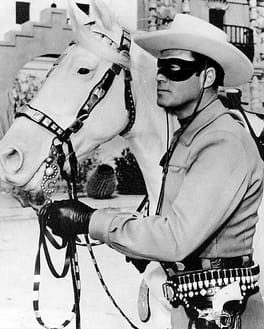
Photo: Pleasure Island Uploaded by We hope at en.wikipedia / Public domain (source: Wikimedia Commons)
Born on September 14, 1914, Clayton Moore was from Chicago, Illinois, United States. Clayton Moore was a television actor and film actor. Death is recorded on December 28, 1999, at the age of 85. Education on record includes Roger C. Sullivan High School. Awards on record include star on Hollywood Walk of Fame.
My Take
Clayton Moore is fascinating to me because of how completely he merged with a single role. As the Lone Ranger across the early 1950s, he became the moral compass for a generation of American kids, and he never really stepped out of the saddle afterward. Many actors run from typecasting; Moore embraced it, defending the character's integrity for the rest of his life. That kind of devotion strikes me as rare and a little heroic in its own right. The star on the Hollywood Walk of Fame feels almost incidental next to the cultural fingerprint he left. The mask outlived the man, exactly as it should.
This take was written by generative AI, one per person, from publicly reported facts (editorial policy). It is a reading of the record, not reporting.
1. Profile
- Name (English)
- Clayton Moore
- Name (Japanese)
- クレイトン・ムーア
- Reading
- くれいとん・むーあ
- Born
- September 14, 1914 – December 28, 1999
- Origin
- Chicago, Illinois, United States
- Occupation
- actor / television actor / film actor
- Zodiac / Chinese zodiac
- Virgo / Tiger
2. Background
- High school
- Roger C. Sullivan High School
Awards & achievements
- star on Hollywood Walk of Fame
3. Links
4. About this entry
Tags
- Last updated
Facts are limited to publicly available information up to 2024; non-public or unconfirmed items are omitted. English text is machine-assisted (facts translated by Sonnet, "My Take" written by Opus 4.8). The Japanese page is the source of record.
Frequently asked questions
When was Clayton Moore born?
Born September 14, 1914.
When did Clayton Moore die?
Died December 28, 1999, aged 85.
Where was Clayton Moore from?
Clayton Moore was from Chicago, Illinois, United States.
What did Clayton Moore do?
Clayton Moore worked as actor, television actor, film actor.
Actor — see all → · Television actor — see all → · More people from the United States →