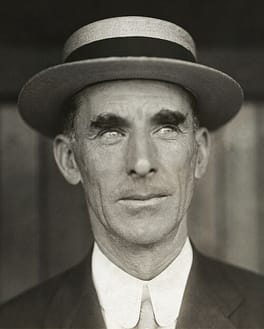
Photo: Paul Thompson / Public domain (source: Wikimedia Commons)
Connie Mack was a baseball player, baseball player-manager and baseball manager, born on December 22, 1862 in East Brookfield, Massachusetts, United States. Death is recorded on February 8, 1956, at the age of 93. Recorded honors include National Baseball Hall of Fame and Museum (1937).
My Take
Connie Mack is genuinely one of the most extraordinary figures in baseball history, and the numbers alone are enough to make your jaw drop — 3,731 wins and nearly 8,000 games managed over a career that stretched across half a century. Born Cornelius McGillicuddy back in 1862 in small-town Massachusetts, he caught professionally in the dead-ball era and then pivoted to managing the Philadelphia Athletics starting in 1901, building dynasty teams that won five World Series championships. What I find remarkable is that he managed well into his eighties, often sitting in the dugout in a business suit and tie instead of a uniform, directing fielders with a rolled-up scorecard. That image alone says everything about the man — old-school authority, total self-possession. Nobody in the history of the sport will ever match his managerial record; the gap between him and second place is nearly 850 wins. A true original.
This take was written by generative AI, one per person, from publicly reported facts (editorial policy). It is a reading of the record, not reporting.
1. Profile
- Name (English)
- Connie Mack
- Name (Japanese)
- コニー・マック
- Reading
- こにー・まっく
- Born
- December 22, 1862 – February 8, 1956
- Origin
- East Brookfield, Massachusetts, United States
- Occupation
- baseball player / baseball player-manager / baseball manager
- Zodiac / Chinese zodiac
- Capricorn / Dog
2. Background
Awards & achievements
- 1937 National Baseball Hall of Fame and Museum
3. Links
- Wikipedia (English)https://en.wikipedia.org/wiki/Connie%20Mack
- Wikipedia (Japanese)https://ja.wikipedia.org/wiki/%E3%82%B3%E3%83%8B%E3%83%BC%E3%83%BB%E3%83%9E%E3%83%83%E3%82%AF
- Wikidatahttps://www.wikidata.org/wiki/Q1126349
4. About this entry
Tags
- Last updated
Only publicly available facts are listed; non-public or unconfirmed items are omitted. Base data was compiled from Wikidata from June 2026 onward; ages are recalculated daily and deaths are checked against Wikidata on an ongoing basis. English text is machine-assisted (facts translated by Sonnet, "My Take" written by Opus 4.8). The Japanese page is the source of record.
Frequently asked questions
When was Connie Mack born?
Connie Mack was born on December 22, 1862.
When did Connie Mack die?
Connie Mack died on February 8, 1956, aged 93.
Where was Connie Mack from?
Connie Mack was from East Brookfield, Massachusetts, United States.
What did Connie Mack do?
Connie Mack worked as baseball player, baseball player-manager, baseball manager.
Baseball player — see all → · More people from the United States → · More people born on December 22 →