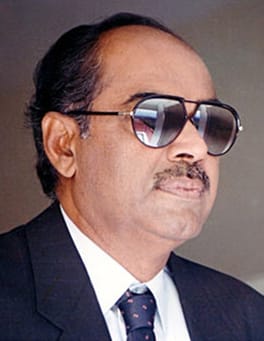
Photo: Reddit / CC BY-SA 4.0 (source: Wikimedia Commons)
Born on June 6, 1936, D. Ramanaidu was from Karamchedu, Prakasam district, India. D. Ramanaidu was a politician, film producer and film director. Death is recorded on February 18, 2015, at the age of 78. Schooling on record includes Presidency College. Awards on record include Dadasaheb Phalke Award (2009) and Padma Bhushan (2012).
My Take
D. Ramanaidu is the sort of figure who reshapes an entire industry, and I'm endlessly drawn to empire-builders like him. Born in a small Andhra village in 1936, he founded Suresh Productions in 1964 and grew it into one of India's largest studios, becoming a towering force in Telugu cinema while also serving as a politician. The Dadasaheb Phalke Award and Padma Bhushan only confirm the scale of his legacy. What moves me is the sheer volume of work he poured into the world, building the backbone of Indian entertainment from nothing. Even after his death in 2015, his films keep that legacy alive.
This take was written by generative AI, one per person, from publicly reported facts (editorial policy). It is a reading of the record, not reporting.
1. Profile
- Name (English)
- D. Ramanaidu
- Name (Japanese)
- ダッグバーティ・ラマナイドゥ
- Reading
- だっぐばーてぃ・らまないどぅ
- Born
- June 6, 1936 – February 18, 2015
- Origin
- Karamchedu, Prakasam district, India
- Occupation
- politician / film producer / film director
- Zodiac / Chinese zodiac
- Gemini / Rat
2. Background
- University
- Presidency College
Awards & achievements
- 2009 Dadasaheb Phalke Award
- 2012 Padma Bhushan
3. Links
4. About this entry
Tags
- Last updated
Facts are limited to publicly available information up to 2024; non-public or unconfirmed items are omitted. English text is machine-assisted (facts translated by Sonnet, "My Take" written by Opus 4.8). The Japanese page is the source of record.
Frequently asked questions
When was D. Ramanaidu born?
Born June 6, 1936.
When did D. Ramanaidu die?
Died February 18, 2015, aged 78.
Where was D. Ramanaidu from?
D. Ramanaidu was from Karamchedu, Prakasam district, India.
What did D. Ramanaidu do?
D. Ramanaidu worked as politician, film producer, film director.
Politician — see all → · Film producer — see all → · More people from India →