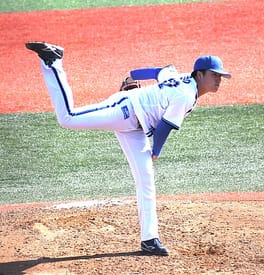
Photo: Moonlight Shado / CC BY-SA 4.0 (source: Wikimedia Commons)
My Take
Dai Kato is a 2002-born pitcher out of Kawasaki, Kanagawa, a lifelong BayStars fan who got to wear their uniform, and there's something quietly compelling about how hard he fought to get back to that level. Kawasaki sits in that interesting in-between zone — not quite Yokohama, not quite Tokyo — and I like to think that shapes a certain kind of gritty, unpretentious work ethic. He topped out at 153 km/h, spent three years in DeNA's developmental system and two more in the independent league before calling it a career in 2025. I'll be curious to see what he does next. The players I end up respecting most are usually the ones who showed up before I thought to look.
This take was written by generative AI, one per person, from publicly reported facts (editorial policy). It is a reading of the record, not reporting.
Overview
Dai Kato is a Japanese former professional baseball pitcher born on April 24, 2002, in Kawasaki, Kanagawa Prefecture. A hard-throwing right-hander from Yokohama Hayato High School, he was a developmental player with the Yokohama DeNA BayStars from 2021 to 2023, then pitched for the independent Kanagawa Future Dreams before retiring in 2025.
1. Profile
- Name (English)
- Dai Kato
- Name (Japanese)
- 加藤大
- Reading
- かとう だい
- Born
- April 24, 2002 (age 24)
- Origin
- Kawasaki, Kanagawa Prefecture, Japan
- Occupation
- Baseball player
- Zodiac / Chinese zodiac
- Taurus / Horse
2. Links
3. About this entry
Tags
- Last updated
Only publicly available facts are listed; non-public or unconfirmed items are omitted. Base data was compiled from Wikidata from June 2026 onward; ages are recalculated daily and deaths are checked against Wikidata on an ongoing basis. English text is machine-assisted (facts translated by Sonnet, "My Take" written by Opus 4.8). The Japanese page is the source of record.
Frequently asked questions
When was Dai Kato born?
Dai Kato was born on April 24, 2002 and is 24 years old.
Where is Dai Kato from?
Dai Kato is from Kawasaki, Kanagawa Prefecture, Japan.
What does Dai Kato do?
Dai Kato works as Baseball player.
Baseball player — see all → · More people from Japan → · More people born on April 24 →