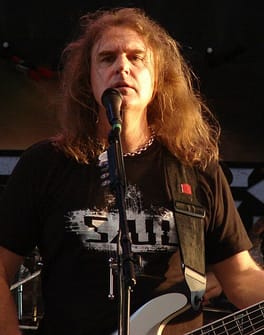
Photo: Carter Sterling / CC BY-SA 4.0 (source: Wikimedia Commons)
Born on November 12, 1964, David Ellefson is from Jackson, Minnesota, United States. David Ellefson is credited as a bassist, composer and guitarist. That works out to 61 years old in 2026. Credited works include Dwellers and The Lucid.
My Take
David Ellefson is one of those musicians who quietly holds an entire genre together — the kind of guy where you don't fully appreciate what he does until you imagine the music without him. Growing up in Jackson, Minnesota, about as far from the Sunset Strip as you can get, he somehow ended up co-founding Megadeth with Dave Mustaine and locking in that thunderous low-end groove that made songs like Peace Sells and Symphony of Destruction hit so hard. His bass lines aren't flashy for the sake of it; they're precise, driving, and absolutely essential. The guy went through lineup changes, personal turbulence, and more Megadeth drama than most bands experience in a lifetime — and still kept showing up. For me, he's the unsung backbone of thrash metal's golden era, and that's a legacy worth respecting.
This take was written by generative AI, one per person, from publicly reported facts (editorial policy). It is a reading of the record, not reporting.
1. Profile
- Name (English)
- David Ellefson
- Name (Japanese)
- デイヴィッド・エレフソン
- Reading
- でいゔぃっど・えれふそん
- Born
- November 12, 1964 (age 61)
- Origin
- Jackson, Minnesota, United States
- Occupation
- bassist / composer / guitarist / musician / executive producer
- Zodiac / Chinese zodiac
- Scorpio / Dragon
2. Works & records
Filmography / notable works
| Category | Title |
|---|---|
| Notable work | Dwellers |
| Notable work | The Lucid |
3. Links
- Official sitehttps://www.davidellefson.com
- Instagramhttps://www.instagram.com/davidellefsonbass/
- Xhttps://x.com/ellefsondavid
- Wikipedia (English)https://en.wikipedia.org/wiki/David%20Ellefson
- Wikipedia (Japanese)https://ja.wikipedia.org/wiki/%E3%83%87%E3%82%A4%E3%83%B4%E3%82%A3%E3%83%83%E3%83%89%E3%83%BB%E3%82%A8%E3%83%AC%E3%83%95%E3%82%BD%E3%83%B3
- Wikidatahttps://www.wikidata.org/wiki/Q289647
4. About this entry
Tags
- Last updated
Only publicly available facts are listed; non-public or unconfirmed items are omitted. Base data was compiled from Wikidata from June 2026 onward; ages are recalculated daily and deaths are checked against Wikidata on an ongoing basis. English text is machine-assisted (facts translated by Sonnet, "My Take" written by Opus 4.8). The Japanese page is the source of record.
Frequently asked questions
When was David Ellefson born?
David Ellefson was born on November 12, 1964 and is 61 years old.
Where is David Ellefson from?
David Ellefson is from Jackson, Minnesota, United States.
What does David Ellefson do?
David Ellefson works as bassist, composer, guitarist, musician, executive producer.
What is David Ellefson known for?
David Ellefson's notable works include Dwellers, The Lucid.
Bassist — see all → · Composer — see all → · More people from the United States → · More people born on November 12 →