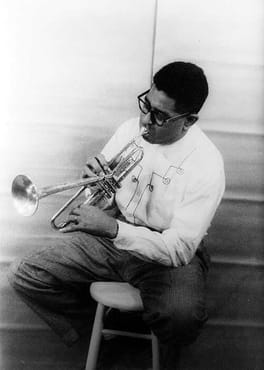
Photo: Carl Van Vechten / Public domain (source: Wikimedia Commons)
Born on October 21, 1917, Dizzy Gillespie was from Cheraw, South Carolina, United States. Dizzy Gillespie was listed as a pianist, composer and trumpeter. Death is recorded on January 6, 1993, at the age of 75. Listed accolades include National Medal of Arts (1989), Grammy Lifetime Achievement Award (1989), Paul Acket Award and 5 more.
My Take
Dizzy Gillespie embodies something I treasure: profound innovation worn lightly. He helped invent bebop alongside Charlie Parker, layering harmonic and rhythmic complexity that reshaped jazz forever - yet he did it with puffed cheeks, a bent trumpet, and a grin that put audiences at ease. That blend of genius and warmth is incredibly rare. The National Medal of Arts and a Grammy Lifetime Achievement Award only confirm what the ear already knows. For me, he's proof that the most demanding music can also be the most joyful. I never finish a Gillespie record feeling anything but lifted.
This take was written by generative AI, one per person, from publicly reported facts (editorial policy). It is a reading of the record, not reporting.
1. Profile
- Name (English)
- Dizzy Gillespie
- Name (Japanese)
- ディジー・ガレスピー
- Reading
- でぃじー・がれすぴー
- Born
- October 21, 1917 – January 6, 1993
- Origin
- Cheraw, South Carolina, United States
- Occupation
- pianist / composer / trumpeter / bandleader / conductor
- Zodiac / Chinese zodiac
- Libra / Snake
2. Background
Awards & achievements
- 1989 National Medal of Arts
- 1989 Grammy Lifetime Achievement Award
- Paul Acket Award
- Kennedy Center Honors
- Commandeur des Arts et des Lettres
- star on Hollywood Walk of Fame
- NEA Jazz Masters
- 2014 New Jersey Hall of Fame
3. Links
- Official sitehttp://www.dizzygillespie.com/
- Wikipedia (English)https://en.wikipedia.org/wiki/Dizzy%20Gillespie
- Wikipedia (Japanese)https://ja.wikipedia.org/wiki/%E3%83%87%E3%82%A3%E3%82%B8%E3%83%BC%E3%83%BB%E3%82%AC%E3%83%AC%E3%82%B9%E3%83%94%E3%83%BC
- Wikidatahttps://www.wikidata.org/wiki/Q49575
4. About this entry
Tags
- Last updated
Facts are limited to publicly available information up to 2024; non-public or unconfirmed items are omitted. English text is machine-assisted (facts translated by Sonnet, "My Take" written by Opus 4.8). The Japanese page is the source of record.
Frequently asked questions
When was Dizzy Gillespie born?
Dizzy Gillespie was born on October 21, 1917.
When did Dizzy Gillespie die?
Dizzy Gillespie died on January 6, 1993, aged 75.
Where was Dizzy Gillespie from?
Dizzy Gillespie was from Cheraw, South Carolina, United States.
What did Dizzy Gillespie do?
Dizzy Gillespie worked as pianist, composer, trumpeter, bandleader, conductor.
Pianist — see all → · Composer — see all → · More people from the United States → · More people born on October 21 →