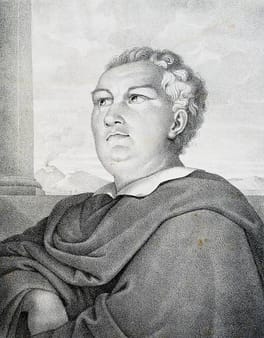
Photo: Unknown author / CC0 (source: Wikimedia Commons)
Public records list Domenico Cimarosa as a composer. Born on December 17, 1749, Domenico Cimarosa was from Aversa, Province of Caserta, Italy. Death is recorded on January 11, 1801, at the age of 51. Credited works include Il matrimonio segreto.
My Take
Cimarosa is one of those names I find genuinely poignant. In his own lifetime he was a superstar, churning out more than eighty operas and rivaling Mozart in popularity, yet today he survives mostly through one work, the comic gem Il matrimonio segreto. That fate fascinates me, how fashion can swallow a giant of the Neapolitan school almost whole. I think there is something admirable about a composer who worked overwhelmingly in comedy, chasing lightness and wit rather than grandeur. His instrumental and church music get overlooked, but the buoyancy of that one secret marriage is enough to keep me curious about everything else he left behind.
This take was written by generative AI, one per person, from publicly reported facts (editorial policy). It is a reading of the record, not reporting.
1. Profile
- Name (English)
- Domenico Cimarosa
- Name (Japanese)
- ドメニコ・チマローザ
- Reading
- どめにこ・ちまろーざ
- Born
- December 17, 1749 – January 11, 1801
- Origin
- Aversa, Province of Caserta, Italy
- Occupation
- composer
- Zodiac / Chinese zodiac
- Sagittarius / Snake
2. Works & records
Filmography / notable works
| Category | Title |
|---|---|
| Notable work | Il matrimonio segreto |
3. Links
4. About this entry
Tags
- Last updated
Facts are limited to publicly available information up to 2024; non-public or unconfirmed items are omitted. English text is machine-assisted (facts translated by Sonnet, "My Take" written by Opus 4.8). The Japanese page is the source of record.
Frequently asked questions
When was Domenico Cimarosa born?
Born December 17, 1749.
When did Domenico Cimarosa die?
Died January 11, 1801, aged 51.
Where was Domenico Cimarosa from?
Domenico Cimarosa was from Aversa, Province of Caserta, Italy.
What did Domenico Cimarosa do?
Domenico Cimarosa worked as composer.
What was Domenico Cimarosa known for?
Notable works include Il matrimonio segreto.