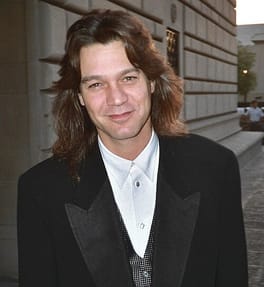
Photo: Alan Light / CC BY 2.0 (source: Wikimedia Commons)
Eddie Van Halen was a guitarist, composer and record producer. Eddie Van Halen was born in Nijmegen, Gelderland, Netherlands on January 26, 1955. Death is recorded on October 6, 2020, at the age of 65. Education on record includes Pasadena High School and Pasadena City College.
My Take
For me, Eddie Van Halen splits guitar history into before and after. An immigrant kid from Nijmegen who landed in Pasadena, he did not simply play faster than everyone; he rethought what the instrument could physically do, popularizing two-handed tapping and building his own hybrid guitars when nothing off the shelf matched the sound in his head. What I love most is that beneath the pyrotechnics sat a composer's ear, and his keyboard work proves the songwriting came first. His death in 2020 closed an era, but every bedroom guitarist attempting his solos keeps that joyful, tinkering spirit alive. Few musicians truly earn the word genius; he did.
This take was written by generative AI, one per person, from publicly reported facts (editorial policy). It is a reading of the record, not reporting.
1. Profile
- Name (English)
- Eddie Van Halen
- Name (Japanese)
- エドワード・ヴァン・ヘイレン
- Reading
- えどわーど・ゔぁん・へいれん
- Born
- January 26, 1955 – October 6, 2020
- Origin
- Nijmegen, Gelderland, Netherlands
- Occupation
- guitarist / composer / record producer / songwriter / keyboardist
- Zodiac / Chinese zodiac
- Aquarius / Goat
2. Background
- High school
- Pasadena High School
- University
- Pasadena City College
3. Links
- Official sitehttp://www.van-halen.com/
- Instagramhttps://www.instagram.com/eddievanhalen/
- Xhttps://x.com/eddievanhalen
- Wikipedia (English)https://en.wikipedia.org/wiki/Eddie%20Van%20Halen
- Wikipedia (Japanese)https://ja.wikipedia.org/wiki/%E3%82%A8%E3%83%89%E3%83%AF%E3%83%BC%E3%83%89%E3%83%BB%E3%83%B4%E3%82%A1%E3%83%B3%E3%83%BB%E3%83%98%E3%82%A4%E3%83%AC%E3%83%B3
- Wikidatahttps://www.wikidata.org/wiki/Q272012
4. About this entry
Tags
- Last updated
Facts are limited to publicly available information up to 2024; non-public or unconfirmed items are omitted. English text is machine-assisted (facts translated by Sonnet, "My Take" written by Opus 4.8). The Japanese page is the source of record.
Frequently asked questions
When was Eddie Van Halen born?
Born January 26, 1955.
When did Eddie Van Halen die?
Died October 6, 2020, aged 65.
Where was Eddie Van Halen from?
Eddie Van Halen was from Nijmegen, Gelderland, Netherlands.
What did Eddie Van Halen do?
Eddie Van Halen worked as guitarist, composer, record producer, songwriter, keyboardist.
Guitarist — see all → · Composer — see all → · More people from the Netherlands →