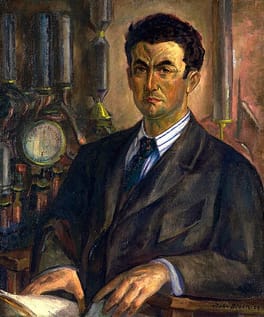
Photo: John Sloan / Public domain (source: Wikimedia Commons)
Public records list Edgard Varèse as a composer, musicologist and conductor. Edgard Varèse was born on December 22, 1883 in Paris, France. Death is recorded on November 6, 1965, at the age of 81.
My Take
Edgard Varese was a true revolutionary, and the more I listen, the more astonished I am at how far ahead of his time he stood. This French-born composer, who spent most of his career in the United States and died in 1965, coined the phrase organized sound, and works like Ionisation and the electronic Poeme Electronique still sound startlingly modern. He essentially heard the future of music decades before the technology caught up. Frank Zappa famously worshipped him, and you can hear his fingerprints across everything experimental that followed. For anyone who thinks classical music is staid, Varese is the radical antidote I always recommend.
This take was written by generative AI, one per person, from publicly reported facts (editorial policy). It is a reading of the record, not reporting.
1. Profile
- Name (English)
- Edgard Varèse
- Name (Japanese)
- エドガー・ヴァレーズ
- Reading
- えどがー・ゔぁれーず
- Born
- December 22, 1883 – November 6, 1965
- Origin
- Paris, France
- Occupation
- composer / musicologist / conductor
- Zodiac / Chinese zodiac
- Capricorn / Goat
2. Links
3. About this entry
Tags
- Last updated
Facts are limited to publicly available information up to 2024; non-public or unconfirmed items are omitted. English text is machine-assisted (facts translated by Sonnet, "My Take" written by Opus 4.8). The Japanese page is the source of record.
Frequently asked questions
When was Edgard Varèse born?
Born December 22, 1883.
When did Edgard Varèse die?
Died November 6, 1965, aged 81.
Where was Edgard Varèse from?
Edgard Varèse was from Paris, France.
What did Edgard Varèse do?
Edgard Varèse worked as composer, musicologist, conductor.
Composer — see all → · Musicologist — see all → · More people from France →