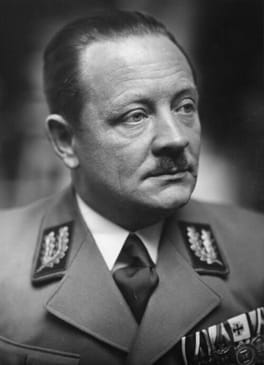
Photo: Unknown / CC BY-SA 3.0 de (source: Wikimedia Commons)
Erich Koch was born on June 19, 1896 in Elberfeld, North Rhine-Westphalia, Germany. Erich Koch was listed as a politician, art collector and correspondent. Death is recorded on November 12, 1986, at the age of 90. Listed accolades include Golden Party Badge (1933), Nazi Party Long Service Award in Bronze (1932), Nazi Party Long Service Award in Silver (1937) and 4 more.
My Take
I'll be blunt: Erich Koch is not someone you write about with any warmth. Born in 1896 in Elberfeld, he clawed his way up through the Nazi Party to become Gauleiter of East Prussia and, during the war, the de facto overlord of occupied territories where he oversaw mass murder and the systematic plunder of art and cultural property. His "art collecting" was theft at gunpoint, backed by a regime he served with genuine enthusiasm. What disturbs me most is the sheer longevity — he lived to 90, spending his final decades in a Polish prison after a 1959 death sentence was commuted, never once showing meaningful remorse. History has figures like Koch precisely so we remember what unchecked ideology and bureaucratic cruelty actually look like up close.
This take was written by generative AI, one per person, from publicly reported facts (editorial policy). It is a reading of the record, not reporting.
1. Profile
- Name (English)
- Erich Koch
- Name (Japanese)
- エーリヒ・コッホ
- Reading
- えーりひ・こっほ
- Born
- June 19, 1896 – November 12, 1986
- Origin
- Elberfeld, North Rhine-Westphalia, Germany
- Occupation
- politician / art collector / correspondent / Holocaust perpetrator / soldier
- Zodiac / Chinese zodiac
- Gemini / Monkey
2. Background
Awards & achievements
- Golden Party Badge
- 1932 Nazi Party Long Service Award in Bronze
- 1933 Golden Party Badge
- 1937 Nazi Party Long Service Award in Silver
- 1938 Honour Chevron for the Old Guard
- 1938 East Prussia Gau Badge
- 1938 10 Year Honor Badge of the Schlageter Memorial Association
- 1939 Danzig Cross 1st Class
3. Links
- Wikipedia (English)https://en.wikipedia.org/wiki/Erich%20Koch
- Wikipedia (Japanese)https://ja.wikipedia.org/wiki/%E3%82%A8%E3%83%BC%E3%83%AA%E3%83%92%E3%83%BB%E3%82%B3%E3%83%83%E3%83%9B
- Wikidatahttps://www.wikidata.org/wiki/Q60353
4. About this entry
Tags
- Last updated
Facts are limited to publicly available information up to 2024; non-public or unconfirmed items are omitted. English text is machine-assisted (facts translated by Sonnet, "My Take" written by Opus 4.8). The Japanese page is the source of record.
Frequently asked questions
When was Erich Koch born?
Born June 19, 1896.
When did Erich Koch die?
Died November 12, 1986, aged 90.
Where was Erich Koch from?
Erich Koch was from Elberfeld, North Rhine-Westphalia, Germany.
What did Erich Koch do?
Erich Koch worked as politician, art collector, correspondent, Holocaust perpetrator, soldier.
Politician — see all → · Art collector — see all → · More people from Germany →