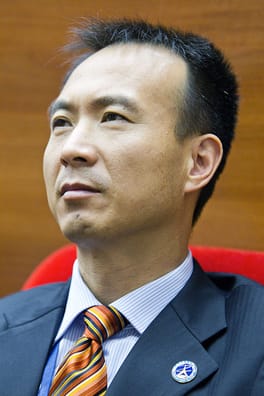
Photo: Dyor / CC BY-SA 3.0 (source: Wikimedia Commons)
Fei Junlong is a fighter pilot and astronaut. Fei Junlong was born in Kunshan, People's Republic of China on May 5, 1965. That works out to 61 years old in 2026. Education on record includes PLA Air Force Aviation University. Recorded honors include Spaceflight Exploit Medal (2005, 2023).
My Take
Fei Junlong genuinely impresses me as a study in long-haul dedication. From fighter pilot to taikonaut, he commanded Shenzhou 6 in 2005, then returned nearly two decades later to lead Shenzhou 15 to the Tiangong station, earning Spaceflight Exploit Medals in both 2005 and 2023. Most people would consider a single trip to orbit a career's crowning achievement; Fei kept his body and skills sharp enough to be chosen again at an age when many retire. That kind of patient, relentless readiness is rare and quietly heroic. I'm drawn to people who pursue the edge of the possible without theatrics, and Fei embodies exactly that.
This take was written by generative AI, one per person, from publicly reported facts (editorial policy). It is a reading of the record, not reporting.
1. Profile
- Name (English)
- Fei Junlong
- Name (Japanese)
- 費俊龍
- Reading
- ひ・しゅんりゅう
- Born
- May 5, 1965 (age 61)
- Origin
- Kunshan, People's Republic of China
- Occupation
- fighter pilot / astronaut
- Zodiac / Chinese zodiac
- Taurus / Snake
2. Background
- University
- PLA Air Force Aviation University
Awards & achievements
- 2005 Spaceflight Exploit Medal
- 2023 Spaceflight Exploit Medal
3. Links
- Wikipedia (English)https://en.wikipedia.org/wiki/Fei%20Junlong
- Wikipedia (Japanese)https://ja.wikipedia.org/wiki/%E8%B2%BB%E4%BF%8A%E7%AB%9C
- Wikidatahttps://www.wikidata.org/wiki/Q344892
4. About this entry
Tags
- Last updated
Facts are limited to publicly available information up to 2024; non-public or unconfirmed items are omitted. English text is machine-assisted (facts translated by Sonnet, "My Take" written by Opus 4.8). The Japanese page is the source of record.
Frequently asked questions
When was Fei Junlong born?
Born May 5, 1965 (age 61).
Where is Fei Junlong from?
Fei Junlong is from Kunshan, People's Republic of China.
What does Fei Junlong do?
Fei Junlong works as fighter pilot, astronaut.
Astronaut — see all → · More people from the People's Republic of China →