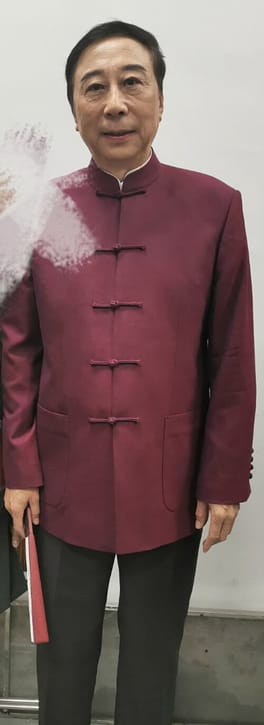
Photo: Huangdan2060 / CC BY 3.0 (source: Wikimedia Commons)
Feng Gong was born on December 6, 1957 in Tianjin, People's Republic of China and is credited as a film director, television actor and xiangsheng performer. Feng Gong is 68 years old as of 2026. Education on record includes Central China Normal University. Listed accolades include Golden Rooster Award for Best Actor (1998).
My Take
Feng Gong fascinates me because he is, in a real sense, the sound of a Chinese New Year. Born in Tianjin in 1957, he has appeared on CCTV's Spring Festival Gala more than any other major performer, which means he has helped open the country's most-watched evening year after year. That's not just popularity, it's becoming part of a ritual. The 1998 Golden Rooster for Best Actor proves he can do more than land a punchline, and his work as director and screenwriter shows real craft. Comedy rarely travels across borders, yet his durability tells me he understood his audience better than almost anyone.
This take was written by generative AI, one per person, from publicly reported facts (editorial policy). It is a reading of the record, not reporting.
1. Profile
- Name (English)
- Feng Gong
- Name (Japanese)
- 馮鞏
- Reading
- ふう・きょう
- Born
- December 6, 1957 (age 68)
- Origin
- Tianjin, People's Republic of China
- Occupation
- film director / actor / television actor / xiangsheng performer / screenwriter
- Zodiac / Chinese zodiac
- Sagittarius / Rooster
2. Background
- University
- Central China Normal University
Awards & achievements
- 1998 Golden Rooster Award for Best Actor
3. Links
- Wikipedia (English)https://en.wikipedia.org/wiki/Feng%20Gong
- Wikipedia (Japanese)https://ja.wikipedia.org/wiki/%E9%A6%AE%E9%9E%8F
- Wikidatahttps://www.wikidata.org/wiki/Q5443378
4. About this entry
Tags
- Last updated
Facts are limited to publicly available information up to 2024; non-public or unconfirmed items are omitted. English text is machine-assisted (facts translated by Sonnet, "My Take" written by Opus 4.8). The Japanese page is the source of record.
Frequently asked questions
When was Feng Gong born?
Born December 6, 1957 (age 68).
Where is Feng Gong from?
Feng Gong is from Tianjin, People's Republic of China.
What does Feng Gong do?
Feng Gong works as film director, actor, television actor, xiangsheng performer, screenwriter.
Film director — see all → · Actor — see all → · More people from the People's Republic of China →