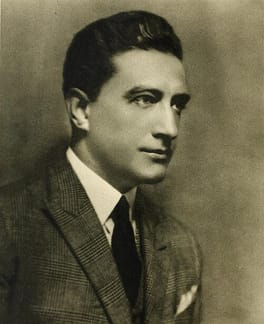
Photo: Edward Thayer Monroe / Public domain (source: Wikimedia Commons)
Francis X. Bushman was born on January 10, 1883 in Baltimore, Maryland, United States and was credited as a screenwriter, film director and film actor. Francis X. Bushman died on August 23, 1966, aged 83. Awards on record include star on Hollywood Walk of Fame.
My Take
Francis X. Bushman is, to me, the very picture of silent-era glamour. Born in Baltimore in 1883, he debuted in 1911 and became one of the biggest stars of the 1910s and early '20s, drawing a huge female following with nothing but presence and expression, no dialogue at all. He came up through the stage, like so many pioneers, and earned a star on the Hollywood Walk of Fame. The talkie era tends to erase these early matinee idols, but I think they deserve remembering, since they shaped the original grammar of film stardom that everyone after them inherited.
This take was written by generative AI, one per person, from publicly reported facts (editorial policy). It is a reading of the record, not reporting.
1. Profile
- Name (English)
- Francis X. Bushman
- Name (Japanese)
- フランシス・X・ブッシュマン
- Reading
- ふらんしす・X・ぶっしゅまん
- Born
- January 10, 1883 – August 23, 1966
- Origin
- Baltimore, Maryland, United States
- Occupation
- actor / screenwriter / film director / film actor / television actor
- Zodiac / Chinese zodiac
- Capricorn / Goat
2. Background
Awards & achievements
- star on Hollywood Walk of Fame
3. Links
- Wikipedia (English)https://en.wikipedia.org/wiki/Francis%20X.%20Bushman
- Wikidatahttps://www.wikidata.org/wiki/Q1368590
4. About this entry
Tags
- Last updated
Facts are limited to publicly available information up to 2024; non-public or unconfirmed items are omitted. English text is machine-assisted (facts translated by Sonnet, "My Take" written by Opus 4.8). The Japanese page is the source of record.
Frequently asked questions
When was Francis X. Bushman born?
Francis X. Bushman was born on January 10, 1883.
When did Francis X. Bushman die?
Francis X. Bushman died on August 23, 1966, aged 83.
Where was Francis X. Bushman from?
Francis X. Bushman was from Baltimore, Maryland, United States.
What did Francis X. Bushman do?
Francis X. Bushman worked as actor, screenwriter, film director, film actor, television actor.
Actor — see all → · Screenwriter — see all → · More people from the United States → · More people born on January 10 →