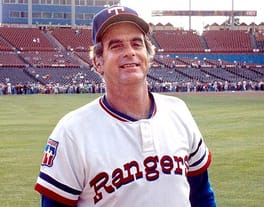
Photo: twm1340 / CC BY-SA 2.0 (source: Wikimedia Commons)
Gaylord Perry, born on September 15, 1938 in Williamston, North Carolina, United States, was a baseball player. Death is recorded on December 1, 2022, at the age of 84. Education on record includes Campbell University. Listed accolades include North Carolina Sports Hall of Fame (1973).
My Take
Gaylord Perry is one of those figures who made baseball genuinely fun to think about — not just because of the stats, but because of the audacity. The man played for eight teams over 22 seasons, won the Cy Young Award in both the American and National leagues (a first for any pitcher), and made five All-Star squads, yet somehow the thing everybody keeps talking about is whether he was loading up the baseball. He never really denied it in any convincing way, and his 1974 autobiography was literally titled "Me and the Spitter," so you have to respect the honesty-in-retrospect there. A kid out of Williamston, North Carolina who went to Campbell University and clawed his way into the Hall of Fame through pure durability and guile — that's a career. He passed away in December 2022 at 84, and honestly the game lost one of its great characters.
This take was written by generative AI, one per person, from publicly reported facts (editorial policy). It is a reading of the record, not reporting.
1. Profile
- Name (English)
- Gaylord Perry
- Name (Japanese)
- ゲイロード・ペリー
- Reading
- げいろーど・ぺりー
- Born
- September 15, 1938 – December 1, 2022
- Origin
- Williamston, North Carolina, United States
- Occupation
- baseball player
- Zodiac / Chinese zodiac
- Virgo / Tiger
2. Background
- University
- Campbell University
Awards & achievements
- 1973 North Carolina Sports Hall of Fame
3. Links
4. About this entry
Tags
- Last updated
Only publicly available facts are listed; non-public or unconfirmed items are omitted. Base data was compiled from Wikidata from June 2026 onward; ages are recalculated daily and deaths are checked against Wikidata on an ongoing basis. English text is machine-assisted (facts translated by Sonnet, "My Take" written by Opus 4.8). The Japanese page is the source of record.
Frequently asked questions
When was Gaylord Perry born?
Gaylord Perry was born on September 15, 1938.
When did Gaylord Perry die?
Gaylord Perry died on December 1, 2022, aged 84.
Where was Gaylord Perry from?
Gaylord Perry was from Williamston, North Carolina, United States.
What did Gaylord Perry do?
Gaylord Perry worked as baseball player.
Where did Gaylord Perry study?
Gaylord Perry attended Campbell University.
Baseball player — see all → · More people from the United States → · More people born on September 15 →