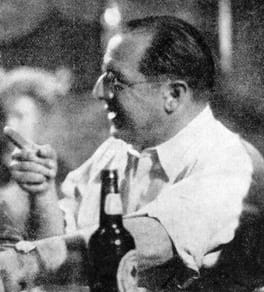
Photo: AnonymousUnknown author / Public domain (source: Wikimedia Commons)
Georg Wilhelm Pabst, born on August 25, 1885 in Roudnice nad Labem, Ústí nad Labem Region, Czech Republic, was a film director, film editor and screenwriter. Georg Wilhelm Pabst died on May 29, 1967, aged 81. Listed accolades include Ring of Honour of the City of Vienna.
My Take
Georg Wilhelm Pabst sits, for me, near the center of cinema history. Born in what is now the Czech Republic, he moved from stage acting and directing into film and became one of the defining German-language directors of the Weimar era. His background as an actor shows: he reads human psychology with unflinching honesty, refusing to look away from darkness. Surviving the violent transition from silent to sound, and honored with Vienna's Ring of Honour, he left work that still feels taut today. Preserving and championing artists of this caliber for future audiences strikes me as essential.
This take was written by generative AI, one per person, from publicly reported facts (editorial policy). It is a reading of the record, not reporting.
1. Profile
- Name (English)
- Georg Wilhelm Pabst
- Name (Japanese)
- ゲオルク・ヴィルヘルム・パープスト
- Reading
- げおるく・ゔぃるへるむ・ぱーぷすと
- Born
- August 25, 1885 – May 29, 1967
- Origin
- Roudnice nad Labem, Ústí nad Labem Region, Czech Republic
- Occupation
- film director / film editor / screenwriter / actor / stage actor
- Zodiac / Chinese zodiac
- Virgo / Rooster
2. Background
Awards & achievements
- Ring of Honour of the City of Vienna
3. Links
- Wikipedia (English)https://en.wikipedia.org/wiki/G.%20W.%20Pabst
- Wikipedia (Japanese)https://ja.wikipedia.org/wiki/%E3%82%B2%E3%82%AA%E3%83%AB%E3%82%AF%E3%83%BB%E3%83%B4%E3%82%A3%E3%83%AB%E3%83%98%E3%83%AB%E3%83%A0%E3%83%BB%E3%83%91%E3%83%BC%E3%83%97%E3%82%B9%E3%83%88
- Wikidatahttps://www.wikidata.org/wiki/Q55421
4. About this entry
Tags
- Last updated
Facts are limited to publicly available information up to 2024; non-public or unconfirmed items are omitted. English text is machine-assisted (facts translated by Sonnet, "My Take" written by Opus 4.8). The Japanese page is the source of record.
Frequently asked questions
When was Georg Wilhelm Pabst born?
Georg Wilhelm Pabst was born on August 25, 1885.
When did Georg Wilhelm Pabst die?
Georg Wilhelm Pabst died on May 29, 1967, aged 81.
Where was Georg Wilhelm Pabst from?
Georg Wilhelm Pabst was from Roudnice nad Labem, Ústí nad Labem Region, Czech Republic.
What did Georg Wilhelm Pabst do?
Georg Wilhelm Pabst worked as film director, film editor, screenwriter, actor, stage actor.
Film director — see all → · Film editor — see all → · More people from the Czech Republic → · More people born on August 25 →