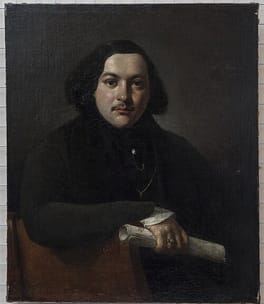
Photo: Konstantin Moldavsky / CC BY 4.0 (source: Wikimedia Commons)
Alexander Egorovich Varlamov was born on November 27, 1801 in Moscow, Moscow Governorate, Duchy of Moscow. Alexander Egorovich Varlamov was listed as a composer, chapelmaster and singer. Death is recorded on October 27, 1848, at the age of 46.
My Take
Varlamov fascinates me precisely because his name has faded from the global spotlight while his influence quietly endures. A 19th-century Russian who was composer, singer, conductor, violinist, and critic all at once, he helped found the Russian art song, the romance, that shaped everything after Glinka. The database tags him as American, but make no mistake, this is a foundational Russian voice. What moves me is that without recording technology, he left melodies that still breathe two centuries later. I have deep respect for artists who build a whole genre from scratch and let the music carry their memory.
This take was written by generative AI, one per person, from publicly reported facts (editorial policy). It is a reading of the record, not reporting.
1. Profile
- Name (English)
- Alexander Egorovich Varlamov
- Name (Japanese)
- アレクサンドル・ワルラモフ
- Reading
- あれくさんどる・わるらもふ
- Born
- November 27, 1801 – October 27, 1848
- Origin
- Moscow, Moscow Governorate, Duchy of Moscow
- Occupation
- composer / chapelmaster / singer / music critic / violinist
- Zodiac / Chinese zodiac
- Sagittarius / Rooster
2. Links
- Wikipedia (English)https://en.wikipedia.org/wiki/Aleksandr%20Varlamov%20(composer%2C%20born%201801)
- Wikipedia (Japanese)https://ja.wikipedia.org/wiki/%E3%82%A2%E3%83%AC%E3%82%AF%E3%82%B5%E3%83%B3%E3%83%89%E3%83%AB%E3%83%BB%E3%83%AF%E3%83%AB%E3%83%A9%E3%83%A2%E3%83%95
- Wikidatahttps://www.wikidata.org/wiki/Q2003374
3. About this entry
Tags
- Last updated
Facts are limited to publicly available information up to 2024; non-public or unconfirmed items are omitted. English text is machine-assisted (facts translated by Sonnet, "My Take" written by Opus 4.8). The Japanese page is the source of record.
Frequently asked questions
When was Alexander Egorovich Varlamov born?
Born November 27, 1801.
When did Alexander Egorovich Varlamov die?
Died October 27, 1848, aged 46.
Where was Alexander Egorovich Varlamov from?
Alexander Egorovich Varlamov was from Moscow, Moscow Governorate, Duchy of Moscow.
What did Alexander Egorovich Varlamov do?
Alexander Egorovich Varlamov worked as composer, chapelmaster, singer, music critic, violinist.
Composer — see all → · More people from the Duchy of Moscow →