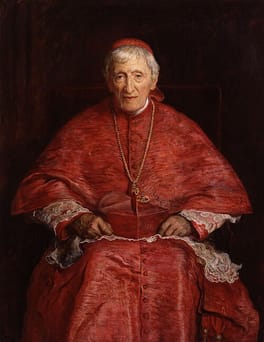
Photo: John Everett Millais / Public domain (source: Wikimedia Commons)
John Henry Newman, born on February 21, 1801 in London, United Kingdom, was a theologian, poet and Anglican priest. John Henry Newman died on August 11, 1890, aged 89. Education on record includes Trinity College.
My Take
John Henry Newman fascinates me because of the courage in his contradictions. An Oxford evangelical scholar and Church of England priest who, following his conscience to its logical end, converted to Catholicism and reshaped 19th-century English religious life, he sacrificed status and friendships for conviction. That willingness to upend a settled, comfortable life in pursuit of truth is rare in any era. He was also genuinely multitalented: theologian, philosopher, historian, poet and novelist. His eventual canonisation feels fitting. Whatever one's beliefs, I am moved by a life lived with such uncompromising intellectual honesty, refusing the easy path long after it would have been simpler to stay put.
This take was written by generative AI, one per person, from publicly reported facts (editorial policy). It is a reading of the record, not reporting.
1. Profile
- Name (English)
- John Henry Newman
- Name (Japanese)
- ジョン・ヘンリー・ニューマン
- Reading
- じょん・へんりー・にゅーまん
- Born
- February 21, 1801 – August 11, 1890
- Origin
- London, United Kingdom
- Occupation
- theologian / poet / Anglican priest / Catholic priest / novelist
- Zodiac / Chinese zodiac
- Pisces / Rooster
2. Background
- University
- Trinity College
3. Links
4. About this entry
Tags
- Last updated
Facts are limited to publicly available information up to 2024; non-public or unconfirmed items are omitted. English text is machine-assisted (facts translated by Sonnet, "My Take" written by Opus 4.8). The Japanese page is the source of record.
Frequently asked questions
When was John Henry Newman born?
John Henry Newman was born on February 21, 1801.
When did John Henry Newman die?
John Henry Newman died on August 11, 1890, aged 89.
Where was John Henry Newman from?
John Henry Newman was from London, United Kingdom.
What did John Henry Newman do?
John Henry Newman worked as theologian, poet, Anglican priest, Catholic priest, novelist.
Where did John Henry Newman study?
John Henry Newman attended Trinity College.
Theologian — see all → · Poet — see all → · More people from the United Kingdom → · More people born on February 21 →