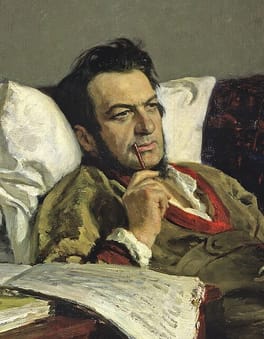
Photo: Unknown author / Public domain (source: Wikimedia Commons)
Mikhail Glinka was a composer, born on May 20, 1804 in Novospasskoye, Smolensk Oblast, Russia. Mikhail Glinka died on February 3, 1857, aged 52. Credited works include Patrioticheskaya Pesnya, Ruslan and Lyudmila and Waltz-Fantasia.
My Take
Glinka holds a place I treasure in music history: the first Russian composer to win broad recognition at home and, in effect, the source from which Russian classical music flows. Born in 1804 near Smolensk, he absorbed Western technique yet folded the soil and spirit of his homeland into works like A Life for the Tsar and Ruslan and Lyudmila. What moves me is the courage of the first step; founding a national voice demands more than talent, it demands conviction. The river that runs to Tchaikovsky and the Mighty Five begins with his single, deliberate drop.
This take was written by generative AI, one per person, from publicly reported facts (editorial policy). It is a reading of the record, not reporting.
1. Profile
- Name (English)
- Mikhail Glinka
- Name (Japanese)
- ミハイル・グリンカ
- Reading
- みはいる・ぐりんか
- Born
- May 20, 1804 – February 3, 1857
- Origin
- Novospasskoye, Smolensk Oblast, Russia
- Occupation
- composer
- Zodiac / Chinese zodiac
- Taurus / Rat
2. Works & records
Filmography / notable works
| Category | Title |
|---|---|
| Notable work | Patrioticheskaya Pesnya |
| Notable work | Ruslan and Lyudmila |
| Notable work | Waltz-Fantasia |
| Notable work | A Life for the Tsar |
3. Links
4. About this entry
Tags
- Last updated
Facts are limited to publicly available information up to 2024; non-public or unconfirmed items are omitted. English text is machine-assisted (facts translated by Sonnet, "My Take" written by Opus 4.8). The Japanese page is the source of record.
Frequently asked questions
When was Mikhail Glinka born?
Mikhail Glinka was born on May 20, 1804.
When did Mikhail Glinka die?
Mikhail Glinka died on February 3, 1857, aged 52.
Where was Mikhail Glinka from?
Mikhail Glinka was from Novospasskoye, Smolensk Oblast, Russia.
What did Mikhail Glinka do?
Mikhail Glinka worked as composer.
What was Mikhail Glinka known for?
Mikhail Glinka's notable works include Patrioticheskaya Pesnya, Ruslan and Lyudmila, Waltz-Fantasia.
Composer — see all → · More people from Russia → · More people born on May 20 →