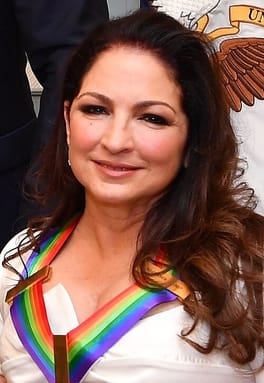
Photo: U.S. State Department / Public domain (source: Wikimedia Commons)
Gloria Estefan was born on September 1, 1957 in Havana, Havana Province, Cuba and is credited as a singer-songwriter, television actor and film actor. Gloria Estefan is 69 years old as of 2026. Education on record includes University of Miami. Listed accolades include MusiCares Person of the Year (1994), Latin Grammy Award for Best Short Form Music Video (2000), Latin Grammy Award for Best Traditional Tropical Album (2008) and 4 more.
My Take
Gloria Estefan is, to my mind, the definitive crossover artist — not because she softened Latin music for Anglo ears, but because she made the mainstream come to her rhythm. Born in Havana and raised in Miami, she carried Cuban percussion into global pop with a confidence that opened doors for an entire generation of Latin stars. Five Grammys and a Presidential Medal of Freedom tell part of the story; the rest is resilience, reinvention, and a businesswoman's discipline behind the stage smile. Whenever I revisit her catalogue, I hear joy that was earned the hard way, and that is why she endures.
This take was written by generative AI, one per person, from publicly reported facts (editorial policy). It is a reading of the record, not reporting.
1. Profile
- Name (English)
- Gloria Estefan
- Name (Japanese)
- グロリア・エステファン
- Reading
- ぐろりあ・えすてふぁん
- Born
- September 1, 1957 (age 69)
- Origin
- Havana, Havana Province, Cuba
- Occupation
- singer-songwriter / television actor / film actor / recording artist / film director
- Zodiac / Chinese zodiac
- Virgo / Rooster
2. Background
- University
- University of Miami
Awards & achievements
- 1994 MusiCares Person of the Year
- 2000 Latin Grammy Award for Best Short Form Music Video
- 2008 Latin Grammy Award for Best Traditional Tropical Album
- 2000 Grammy Award for Best Tropical Latin Album
- 2008 Latin Grammy Award for Best Tropical Song
- 2008 Latin Recording Academy Person of the Year
- 1996 Grammy Award for Best Tropical Latin Album
- 1999 Broadcast Film Critics Association Award for Best Song
3. Links
- Official sitehttp://www.gloriaestefan.com/
- Instagramhttps://www.instagram.com/gloriaestefan/
- Xhttps://x.com/GloriaEstefan
- Wikipedia (English)https://en.wikipedia.org/wiki/Gloria%20Estefan
- Wikipedia (Japanese)https://ja.wikipedia.org/wiki/%E3%82%B0%E3%83%AD%E3%83%AA%E3%82%A2%E3%83%BB%E3%82%A8%E3%82%B9%E3%83%86%E3%83%95%E3%82%A1%E3%83%B3
- Wikidatahttps://www.wikidata.org/wiki/Q184697
4. About this entry
Tags
- Last updated
Facts are limited to publicly available information up to 2024; non-public or unconfirmed items are omitted. English text is machine-assisted (facts translated by Sonnet, "My Take" written by Opus 4.8). The Japanese page is the source of record.
Frequently asked questions
When was Gloria Estefan born?
Born September 1, 1957 (age 69).
Where is Gloria Estefan from?
Gloria Estefan is from Havana, Havana Province, Cuba.
What does Gloria Estefan do?
Gloria Estefan works as singer-songwriter, television actor, film actor, recording artist, film director.
Singer-songwriter — see all → · Television actor — see all → · More people from Cuba →