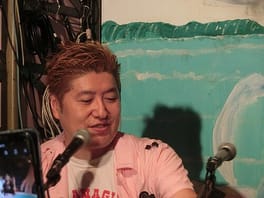
Photo: Bject / CC BY-SA 4.0 (source: Wikimedia Commons)
My Take
Okay, an editor and interviewer? I'm immediately into this guy. Born in 1970 in Nerima, Tokyo, he's the kind of person who's spent decades sitting across from people and quietly drawing out the stuff they didn't plan to say, and honestly that's a craft I respect way more than any flashy talent. The folks who stand center stage get the spotlight, but the ones who can read a room, lean in, and coax out an actual human being underneath the public mask? That's a rare, sneaky-brilliant skill, and it only deepens with age. I picture him as the unglamorous-but-essential type, the listener who outlasts the trends because he genuinely cares what people have to say. That patient, archivist instinct really gets me.
This take was written by generative AI, one per person, from publicly reported facts (editorial policy). It is a reading of the record, not reporting.
Overview
Gō Yoshida is a Japanese editor and interviewer born on September 3, 1970, in Nerima, Tokyo. He is known for his work as a professional interviewer, a role that has earned him recognition in Japanese media circles. His career is primarily associated with drawing out candid accounts from subjects across the entertainment and cultural industries. He maintains an active presence on social media under the handle WORLDJAPAN.
1. Profile
- Name (English)
- Gō Yoshida
- Name (Japanese)
- 吉田豪
- Reading
- よしだ ごう
- Born
- September 3, 1970 (age 56)
- Origin
- Nerima, Tokyo, Japan
- Occupation
- Editor / Interviewer
- Zodiac / Chinese zodiac
- Virgo / Dog
2. Links
3. About this entry
Tags
- Last updated
Facts are limited to publicly available information up to 2024; non-public or unconfirmed items are omitted. English text is machine-assisted (facts translated by Sonnet, "My Take" written by Opus 4.8). The Japanese page is the source of record.
Frequently asked questions
When was Gō Yoshida born?
Born September 3, 1970 (age 56).
Where is Gō Yoshida from?
Gō Yoshida is from Nerima, Tokyo, Japan.
What does Gō Yoshida do?
Gō Yoshida works as Editor, Interviewer.