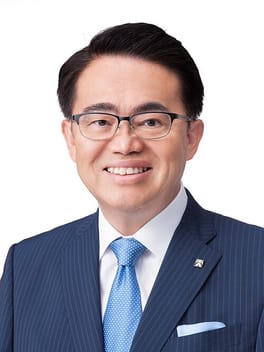
Photo: 内閣府男女共同参画局 / CC BY 4.0 (source: Wikimedia Commons)
My Take
Honestly, when I picture the Governor of Aichi, it's Hideaki Ōmura's face that pops up first, he's just worn the role that long. What gets me is the contrast: here's a guy from Hekinan, a salt-air town out on the Mikawa coast, who went all the way to the University of Tokyo, and yet he never quite lost that down-to-earth, neighborhood-uncle warmth. I love that he can take some thorny policy mess and break it down in plain local terms instead of hiding behind jargon. Aichi is the beating heart of Japanese manufacturing, and standing out front for a place like that, through the good years and the rough ones, takes a kind of stubborn nerve I genuinely respect. Career politicians can feel slick, but Ōmura reads more like the dependable old-timer who just keeps showing up and putting in the work.
This take was written by generative AI, one per person, from publicly reported facts (editorial policy). It is a reading of the record, not reporting.
Overview
Hideaki Ōmura is a Japanese politician born on March 9, 1960, in Hekinan, Aichi Prefecture. He graduated from the University of Tokyo. A former agriculture ministry official and five-term member of the House of Representatives, he has been Governor of Aichi Prefecture since 2011; his father was a carpenter and his mother a farmer.
1. Profile
- Name (English)
- Hideaki Ōmura
- Name (Japanese)
- 大村秀章
- Reading
- おおむら ひであき
- Born
- March 9, 1960 (age 66)
- Origin
- Hekinan, Aichi Prefecture, Japan
- Occupation
- Politician
- Zodiac / Chinese zodiac
- Pisces / Rat
2. Background
- University
- University of Tokyo
3. Links
- Official sitehttps://ohmura-hideaki.jp/
- Xhttps://x.com/ohmura_hideaki
- Wikipedia (Japanese)https://ja.wikipedia.org/wiki/%E5%A4%A7%E6%9D%91%E7%A7%80%E7%AB%A0
- Wikidatahttps://www.wikidata.org/wiki/Q1617350
4. About this entry
Tags
- Last updated
Only publicly available facts are listed; non-public or unconfirmed items are omitted. Base data was compiled from Wikidata from June 2026 onward; ages are recalculated daily and deaths are checked against Wikidata on an ongoing basis. English text is machine-assisted (facts translated by Sonnet, "My Take" written by Opus 4.8). The Japanese page is the source of record.
Frequently asked questions
When was Hideaki Ōmura born?
Hideaki Ōmura was born on March 9, 1960 and is 66 years old.
Where is Hideaki Ōmura from?
Hideaki Ōmura is from Hekinan, Aichi Prefecture, Japan.
What does Hideaki Ōmura do?
Hideaki Ōmura works as Politician.
Where did Hideaki Ōmura study?
Hideaki Ōmura attended University of Tokyo.
Politician — see all → · More people from Japan → · More people born on March 9 →