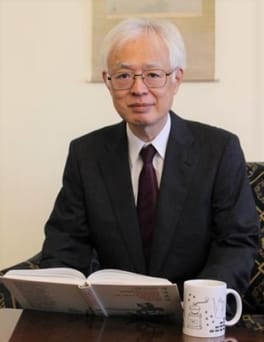
Photo: Unknown author / CC BY 4.0 (source: Wikimedia Commons)
My Take
Hiroki Matsuo is the kind of person who makes you realize how little you think about what diplomacy actually costs. Born in 1963, a Waseda grad, and quietly slotted into a world where your whole job is to be invisible at the exact moments that matter most — that's a very specific calling. From Toyama to the consulate in Los Angeles and, since 2023, the Consul-General's post in Saint Petersburg, his path honestly tracks: the best diplomats aren't the ones giving press conferences, they're the ones in rooms you never hear about, keeping conversations alive that could otherwise collapse. I find that genuinely impressive in an era where everyone's optimizing for visibility. No highlight reel, just decades of painstaking work representing Japan abroad. There's something almost stubbornly admirable about a career built entirely on substance over signal.
This take was written by generative AI, one per person, from publicly reported facts (editorial policy). It is a reading of the record, not reporting.
Overview
Hiroki Matsuo (born November 12, 1963) is a Japanese diplomat from Toyama Prefecture. A Waseda University graduate, he served as consul at the Consulate-General in Los Angeles and in the international affairs office of the Board of Audit, and has been Consul-General in Saint Petersburg since June 2023.
1. Profile
- Name (English)
- Hiroki Matsuo
- Name (Japanese)
- 松尾浩樹
- Reading
- まつお ひろき
- Born
- November 12, 1963 (age 62)
- Origin
- Toyama Prefecture, Japan
- Occupation
- Diplomat
- Zodiac / Chinese zodiac
- Scorpio / Rabbit
2. Background
- University
- Waseda University
3. Links
- Wikipedia (Japanese)https://ja.wikipedia.org/wiki/%E6%9D%BE%E5%B0%BE%E6%B5%A9%E6%A8%B9
- Wikidatahttps://www.wikidata.org/wiki/Q125416856
4. About this entry
Tags
- Last updated
Only publicly available facts are listed; non-public or unconfirmed items are omitted. Base data was compiled from Wikidata from June 2026 onward; ages are recalculated daily and deaths are checked against Wikidata on an ongoing basis. English text is machine-assisted (facts translated by Sonnet, "My Take" written by Opus 4.8). The Japanese page is the source of record.
Frequently asked questions
When was Hiroki Matsuo born?
Hiroki Matsuo was born on November 12, 1963 and is 62 years old.
Where is Hiroki Matsuo from?
Hiroki Matsuo is from Toyama Prefecture, Japan.
What does Hiroki Matsuo do?
Hiroki Matsuo works as Diplomat.
Where did Hiroki Matsuo study?
Hiroki Matsuo attended Waseda University.
Diplomat — see all → · More people from Japan → · More people born on November 12 →