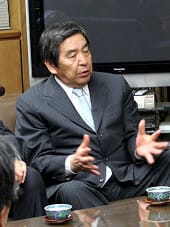
Photo: 総務省 / CC BY 4.0 (source: Wikimedia Commons)
My Take
Hiroshi Hayakawa is the kind of guy who never ends up on the poster but quietly decides what the poster looks like. Born in Yamanashi in 1944 — peach and grape country, grounded and unhurried — he came up through Chuo University and built a career on the production and business side of Japanese television, the side most viewers never think about while they're glued to the screen. There's something genuinely impressive about spending decades steering the machinery rather than performing for it. No flashy social presence, no public persona to speak of, just the steady weight of someone who's kept a large organization moving. A quiet backbone type — and those are usually the ones who matter most.
This take was written by generative AI, one per person, from publicly reported facts (editorial policy). It is a reading of the record, not reporting.
Overview
Hiroshi Hayakawa is a Japanese television producer and businessman born on January 1, 1944, in Fuefuki, Yamanashi Prefecture. He graduated from Chuo University. He has worked behind the scenes in the Japanese television industry, building a career as both a producer and a corporate executive.
1. Profile
- Name (English)
- Hiroshi Hayakawa
- Name (Japanese)
- 早河洋
- Reading
- はやかわ ひろし
- Born
- January 1, 1944 (age 82)
- Origin
- Fuefuki, Yamanashi Prefecture, Japan
- Occupation
- Television producer / Businessman
- Zodiac / Chinese zodiac
- Capricorn / Monkey
2. Background
- University
- Chuo University
3. Links
- Wikipedia (Japanese)https://ja.wikipedia.org/wiki/%E6%97%A9%E6%B2%B3%E6%B4%8B
- Wikidatahttps://www.wikidata.org/wiki/Q11511420
4. About this entry
Tags
- Last updated
Only publicly available facts are listed; non-public or unconfirmed items are omitted. Base data was compiled from Wikidata from June 2026 onward; ages are recalculated daily and deaths are checked against Wikidata on an ongoing basis. English text is machine-assisted (facts translated by Sonnet, "My Take" written by Opus 4.8). The Japanese page is the source of record.
Frequently asked questions
When was Hiroshi Hayakawa born?
Hiroshi Hayakawa was born on January 1, 1944 and is 82 years old.
Where is Hiroshi Hayakawa from?
Hiroshi Hayakawa is from Fuefuki, Yamanashi Prefecture, Japan.
What does Hiroshi Hayakawa do?
Hiroshi Hayakawa works as Television producer, Businessman.
Where did Hiroshi Hayakawa study?
Hiroshi Hayakawa attended Chuo University.
Television producer — see all → · Businessman — see all → · More people from Japan → · More people born on January 1 →