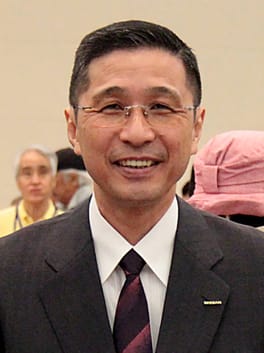
Photo: Bertel Schmitt (BsBsBs) / CC BY-SA 3.0 (source: Wikimedia Commons)
My Take
Hiroto Saikawa is not the kind of person who ends up on a celebrity database for glamorous reasons — this is a career corporate lifer, a Tokyo University grad who spent decades grinding through Nissan's ranks until he finally hit the top seat as CEO. I find guys like this genuinely fascinating in a grim way: all that discipline, all those years in boardrooms and back-channel negotiations, and the ending still gets messy. The suits-and-spreadsheets world he inhabited is so far from showbiz, yet the drama level is honestly comparable.
This take was written by generative AI, one per person, from publicly reported facts (editorial policy). It is a reading of the record, not reporting.
Overview
Hiroto Saikawa (born November 14, 1953) is a Japanese business executive and corporate manager. He graduated from the University of Tokyo and built his career ascending through the ranks of large corporations. Known as a seasoned organizational leader, he operated in the corporate world well removed from the entertainment sphere.
1. Profile
- Name (English)
- Hiroto Saikawa
- Name (Japanese)
- 西川廣人
- Reading
- さいかわ ひろと
- Born
- November 14, 1953 (age 72)
- Origin
- Japan
- Occupation
- Business Executive / Corporate Manager
- Zodiac / Chinese zodiac
- Scorpio / Snake
2. Background
- University
- University of Tokyo
3. Links
- Wikipedia (Japanese)https://ja.wikipedia.org/wiki/%E8%A5%BF%E5%B7%9D%E5%BB%A3%E4%BA%BA
- Wikidatahttps://www.wikidata.org/wiki/Q30923926
4. About this entry
Tags
- Last updated
Only publicly available facts are listed; non-public or unconfirmed items are omitted. Base data was compiled from Wikidata from June 2026 onward; ages are recalculated daily and deaths are checked against Wikidata on an ongoing basis. English text is machine-assisted (facts translated by Sonnet, "My Take" written by Opus 4.8). The Japanese page is the source of record.
Frequently asked questions
When was Hiroto Saikawa born?
Hiroto Saikawa was born on November 14, 1953 and is 72 years old.
Where is Hiroto Saikawa from?
Hiroto Saikawa is from Japan.
What does Hiroto Saikawa do?
Hiroto Saikawa works as Business Executive, Corporate Manager.
Where did Hiroto Saikawa study?
Hiroto Saikawa attended University of Tokyo.
Business Executive — see all → · More people from Japan → · More people born on November 14 →