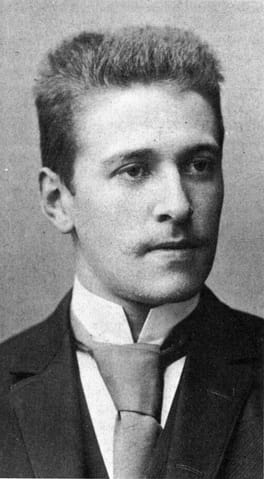
Photo: Unknown author / Public domain (source: Wikimedia Commons)
Hugo von Hofmannsthal was born on February 1, 1874 in Vienna, Austria. Hugo von Hofmannsthal was a novelist, librettist and poet. Death is recorded on July 15, 1929, at the age of 55. Education on record includes University of Vienna. Credited works include Jedermann, Der Rosenkavalier and Elektra.
My Take
Hugo von Hofmannsthal remains one of those literary giants I wish more people read today. A child prodigy who was publishing dazzling poetry in Vienna as a teenager, the Austrian writer became a defining voice of fin-de-siecle modernism. What fascinates me most is his collaboration with Richard Strauss, writing the librettos for Elektra and Der Rosenkavalier, which still stand among the greatest in all of opera. His famous Letter of Lord Chandos, wrestling with the limits of language itself, feels astonishingly modern. He died in 1929, but his fusion of decadence and deep moral seriousness still casts a long shadow.
This take was written by generative AI, one per person, from publicly reported facts (editorial policy). It is a reading of the record, not reporting.
1. Profile
- Name (English)
- Hugo von Hofmannsthal
- Name (Japanese)
- フーゴ・フォン・ホーフマンスタール
- Reading
- ふーご・ふぉん・ほーふまんすたーる
- Born
- February 1, 1874 – July 15, 1929
- Origin
- Vienna, Austria
- Occupation
- novelist / librettist / poet / playwright / writer
- Zodiac / Chinese zodiac
- Aquarius / Dog
2. Background
- University
- University of Vienna
3. Works & records
Filmography / notable works
| Category | Title |
|---|---|
| Notable work | Jedermann |
| Notable work | Der Rosenkavalier |
| Notable work | Elektra |
4. Links
- Wikipedia (English)https://en.wikipedia.org/wiki/Hugo%20von%20Hofmannsthal
- Wikipedia (Japanese)https://ja.wikipedia.org/wiki/%E3%83%95%E3%83%BC%E3%82%B4%E3%83%BB%E3%83%95%E3%82%A9%E3%83%B3%E3%83%BB%E3%83%9B%E3%83%BC%E3%83%95%E3%83%9E%E3%83%B3%E3%82%B9%E3%82%BF%E3%83%BC%E3%83%AB
- Wikidatahttps://www.wikidata.org/wiki/Q51513
5. About this entry
Tags
- Last updated
Facts are limited to publicly available information up to 2024; non-public or unconfirmed items are omitted. English text is machine-assisted (facts translated by Sonnet, "My Take" written by Opus 4.8). The Japanese page is the source of record.
Frequently asked questions
When was Hugo von Hofmannsthal born?
Born February 1, 1874.
When did Hugo von Hofmannsthal die?
Died July 15, 1929, aged 55.
Where was Hugo von Hofmannsthal from?
Hugo von Hofmannsthal was from Vienna, Austria.
What did Hugo von Hofmannsthal do?
Hugo von Hofmannsthal worked as novelist, librettist, poet, playwright, writer.
What was Hugo von Hofmannsthal known for?
Notable works include Jedermann, Der Rosenkavalier, Elektra.
Novelist — see all → · Librettist — see all → · More people from Austria →