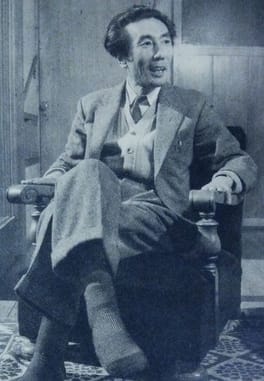
Photo: 朝日新聞社 / Public domain (source: Wikimedia Commons)
My Take
Ichiro Saito is one of those figures who quietly commands respect the more you think about what it actually took to live as a composer in Japan spanning the Meiji era all the way through postwar Showa — that is a lifetime of musical dedication across some genuinely turbulent decades. Born in Chiba in 1909 and trained at Kunitachi College of Music, he committed early and fully to the craft at a time when that path carried real uncertainty. I never got to hear him work in real time, obviously, but there is something that gets me about people who devoted seventy years entirely to one art form without the safety net of modern industry or streaming royalties. He scored 334 films, including Mizoguchi's The Life of Oharu and Naruse's Mother, and that body of work alone tells you it meant something.
This take was written by generative AI, one per person, from publicly reported facts (editorial policy). It is a reading of the record, not reporting.
Overview
Ichiro Saito (August 23, 1909 – November 16, 1979) was a Japanese film composer born in Chiba Prefecture. After studying violin at the Kunitachi Music School and playing in film-music orchestras, he scored 334 films, winning the Mainichi Film Award for music in 1952 for works including The Life of Oharu and Mother.
1. Profile
- Name (English)
- Ichiro Saito
- Name (Japanese)
- 斎藤一郎
- Reading
- さいとう いちろう
- Born
- August 23, 1909 – November 16, 1979
- Origin
- Chiba Prefecture, Japan
- Occupation
- Composer
- Zodiac / Chinese zodiac
- Virgo / Rooster
2. Background
- University
- Kunitachi College of Music
3. Links
- Wikipedia (Japanese)https://ja.wikipedia.org/wiki/%E6%96%8E%E8%97%A4%E4%B8%80%E9%83%8E
- Wikidatahttps://www.wikidata.org/wiki/Q3147667
4. About this entry
Tags
- Last updated
Only publicly available facts are listed; non-public or unconfirmed items are omitted. Base data was compiled from Wikidata from June 2026 onward; ages are recalculated daily and deaths are checked against Wikidata on an ongoing basis. English text is machine-assisted (facts translated by Sonnet, "My Take" written by Opus 4.8). The Japanese page is the source of record.
Frequently asked questions
When was Ichiro Saito born?
Ichiro Saito was born on August 23, 1909.
When did Ichiro Saito die?
Ichiro Saito died on November 16, 1979, aged 70.
Where was Ichiro Saito from?
Ichiro Saito was from Chiba Prefecture, Japan.
What did Ichiro Saito do?
Ichiro Saito worked as Composer.
Where did Ichiro Saito study?
Ichiro Saito attended Kunitachi College of Music.
Composer — see all → · More people from Japan → · More people born on August 23 →