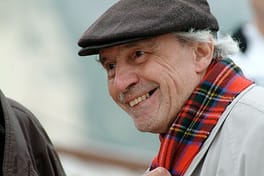
Photo: Raphael Van Sitteren / CC BY-SA 4.0 (source: Wikimedia Commons)
Jacques Rivette was listed as a film director, screenwriter and film critic. Born on March 1, 1928, Jacques Rivette was from Rouen, Seine-Maritime, France. Death is recorded on January 29, 2016, at the age of 87. Listed accolades include Sutherland Trophy (1962, 1969), Los Angeles Film Critics Association Award for Best Foreign Language Film (1991) and Leopard of Honour.
My Take
Jacques Rivette is the French New Wave director I find myself returning to most, even if he's the least famous of the Cahiers du Cinema crowd. The French filmmaker made cinema like no one else, sprawling, hypnotic, gloriously patient films that bend time and reality. Celine and Julie Go Boating is pure magic, and the four-hour La Belle Noiseuse is the most quietly mesmerizing film about art and obsession I've ever seen. His legendary Out 1 runs nearly thirteen hours, a true test of devotion that rewards the faithful. He died in 2016, and I miss knowing there might be another impossible, beautiful Rivette film coming.
This take was written by generative AI, one per person, from publicly reported facts (editorial policy). It is a reading of the record, not reporting.
1. Profile
- Name (English)
- Jacques Rivette
- Name (Japanese)
- ジャック・リヴェット
- Reading
- じゃっく・りゔぇっと
- Born
- March 1, 1928 – January 29, 2016
- Origin
- Rouen, Seine-Maritime, France
- Occupation
- film director / screenwriter / film critic / journalist / writer
- Zodiac / Chinese zodiac
- Pisces / Dragon
2. Background
Awards & achievements
- 1962 Sutherland Trophy
- 1969 Sutherland Trophy
- 1991 Los Angeles Film Critics Association Award for Best Foreign Language Film
- Leopard of Honour
3. Links
4. About this entry
Tags
- Last updated
Facts are limited to publicly available information up to 2024; non-public or unconfirmed items are omitted. English text is machine-assisted (facts translated by Sonnet, "My Take" written by Opus 4.8). The Japanese page is the source of record.
Frequently asked questions
When was Jacques Rivette born?
Born March 1, 1928.
When did Jacques Rivette die?
Died January 29, 2016, aged 87.
Where was Jacques Rivette from?
Jacques Rivette was from Rouen, Seine-Maritime, France.
What did Jacques Rivette do?
Jacques Rivette worked as film director, screenwriter, film critic, journalist, writer.
Film director — see all → · Screenwriter — see all → · More people from France →