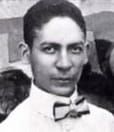
Photo: Photographer not credited. / Public domain (source: Wikimedia Commons)
Jelly Roll Morton was a jazz pianist, bandleader and composer. Jelly Roll Morton was born on October 20, 1890 in New Orleans, Louisiana, United States. Death is recorded on July 10, 1941, at the age of 50. Awards on record include Grammy Lifetime Achievement Award (2005) and Rock and Roll Hall of Fame (1998).
My Take
Jelly Roll Morton fascinates me because he sat right at the hinge of a whole art form. My take is that his real genius wasn't just playing piano, it was proving that jazz could be written down without losing its fire, essentially becoming the music's first true arranger. People love to mock his boastful claim that he invented jazz, but I think that swagger was inseparable from the conviction it took to impose structure on chaos. The Grammy Lifetime Achievement Award and Hall of Fame honors came long after, yet they barely capture how foundational this New Orleans Creole really was.
This take was written by generative AI, one per person, from publicly reported facts (editorial policy). It is a reading of the record, not reporting.
1. Profile
- Name (English)
- Jelly Roll Morton
- Name (Japanese)
- ジェリー・ロール・モートン
- Reading
- じぇりー・ろーる・もーとん
- Born
- October 20, 1890 – July 10, 1941
- Origin
- New Orleans, Louisiana, United States
- Occupation
- jazz pianist / bandleader / composer / conductor / jazz musician
- Zodiac / Chinese zodiac
- Libra / Tiger
2. Background
Awards & achievements
- 2005 Grammy Lifetime Achievement Award
- 1998 Rock and Roll Hall of Fame
3. Links
4. About this entry
Tags
- Last updated
Facts are limited to publicly available information up to 2024; non-public or unconfirmed items are omitted. English text is machine-assisted (facts translated by Sonnet, "My Take" written by Opus 4.8). The Japanese page is the source of record.
Frequently asked questions
When was Jelly Roll Morton born?
Jelly Roll Morton was born on October 20, 1890.
When did Jelly Roll Morton die?
Jelly Roll Morton died on July 10, 1941, aged 50.
Where was Jelly Roll Morton from?
Jelly Roll Morton was from New Orleans, Louisiana, United States.
What did Jelly Roll Morton do?
Jelly Roll Morton worked as jazz pianist, bandleader, composer, conductor, jazz musician.
Jazz pianist — see all → · Bandleader — see all → · More people from the United States → · More people born on October 20 →