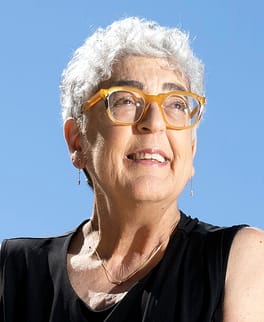
Photo: Christopher Michel / CC BY-SA 4.0 (source: Wikimedia Commons)
Joanne Chory was a botanist, university teacher and biologist, born on March 19, 1955 in Methuen, Massachusetts, United States. Joanne Chory died on November 12, 2024, aged 69. Education on record includes University of Illinois Urbana-Champaign. Recorded honors include L'Oréal-UNESCO Award For Women in Science (2000), Genetics Society of America Medal (2012), Breakthrough Prize in Life Sciences and 5 more.
My Take
Joanne Chory was, to me, one of the most consequential scientists of her generation, and I find her story deeply moving. Her work at the Salk Institute on how plants sense light reshaped plant biology, and her vision of engineering crops to fight climate change was breathtakingly ambitious. The sheer weight of her honors, from the L'Oréal-UNESCO Award to the Breakthrough Prize and Royal Society membership, only hints at her impact. What strikes me most is that a woman from a small Massachusetts town reached the very summit of global science. Her passing in 2024 is a real loss, but her legacy endures.
This take was written by generative AI, one per person, from publicly reported facts (editorial policy). It is a reading of the record, not reporting.
1. Profile
- Name (English)
- Joanne Chory
- Name (Japanese)
- ジョアン・コリー
- Reading
- じょあん・こりー
- Born
- March 19, 1955 – November 12, 2024
- Origin
- Methuen, Massachusetts, United States
- Occupation
- botanist / university teacher / biologist / geneticist
- Zodiac / Chinese zodiac
- Pisces / Goat
2. Background
- University
- University of Illinois Urbana-Champaign
Awards & achievements
- 2000 L'Oréal-UNESCO Award For Women in Science
- 2012 Genetics Society of America Medal
- Breakthrough Prize in Life Sciences
- 2005 Fellow of the American Association for the Advancement of Science
- 2011 Foreign Member of the Royal Society
- 2018 Gruber Prize in Genetics
- 2019 Princess of Asturias Award for Technical and Scientific Research
- 2020 Pearl Meister Greengard Prize
3. Links
- Official sitehttps://www.salk.edu/faculty/chory.html
- Wikipedia (English)https://en.wikipedia.org/wiki/Joanne%20Chory
- Wikipedia (Japanese)https://ja.wikipedia.org/wiki/%E3%82%B8%E3%83%A7%E3%82%A2%E3%83%B3%E3%83%BB%E3%82%B3%E3%83%AA%E3%83%BC
- Wikidatahttps://www.wikidata.org/wiki/Q15994359
4. About this entry
Tags
- Last updated
Facts are limited to publicly available information up to 2024; non-public or unconfirmed items are omitted. English text is machine-assisted (facts translated by Sonnet, "My Take" written by Opus 4.8). The Japanese page is the source of record.
Frequently asked questions
When was Joanne Chory born?
Born March 19, 1955.
When did Joanne Chory die?
Died November 12, 2024, aged 69.
Where was Joanne Chory from?
Joanne Chory was from Methuen, Massachusetts, United States.
What did Joanne Chory do?
Joanne Chory worked as botanist, university teacher, biologist, geneticist.
University teacher — see all → · More people from the United States →