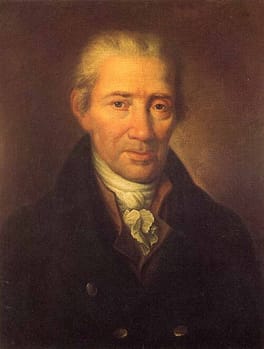
Photo: Leopold Kupelwieser / Public domain (source: Wikimedia Commons)
Johann Georg Albrechtsberger was born on February 3, 1736 in Klosterneuburg, Lower Austria, Austria. Johann Georg Albrechtsberger was a composer, musicologist and musician. Death is recorded on March 7, 1809, at the age of 73.
My Take
Albrechtsberger is a name I respect more for his influence than his fame. Born near Vienna in 1736, he became one of the Classical period's authorities on counterpoint, and I find that fascinating because his real legacy lived in his students rather than the concert hall. He wrote plenty of church music and keyboard works, yet he is remembered above all as a teacher, and to me that is a rarer kind of greatness. Shaping how others compose outlasts any single piece. I always gravitate toward figures who built the foundations under more celebrated names, and he is exactly that sort.
This take was written by generative AI, one per person, from publicly reported facts (editorial policy). It is a reading of the record, not reporting.
1. Profile
- Name (English)
- Johann Georg Albrechtsberger
- Name (Japanese)
- ヨハン・ゲオルク・アルブレヒツベルガー
- Reading
- よはん・げおるく・あるぶれひつべるがー
- Born
- February 3, 1736 – March 7, 1809
- Origin
- Klosterneuburg, Lower Austria, Austria
- Occupation
- composer / musicologist / musician / pedagogue / music theorist
- Zodiac / Chinese zodiac
- Aquarius / Dragon
2. Links
- Wikipedia (English)https://en.wikipedia.org/wiki/Johann%20Georg%20Albrechtsberger
- Wikipedia (Japanese)https://ja.wikipedia.org/wiki/%E3%83%A8%E3%83%8F%E3%83%B3%E3%83%BB%E3%82%B2%E3%82%AA%E3%83%AB%E3%82%AF%E3%83%BB%E3%82%A2%E3%83%AB%E3%83%96%E3%83%AC%E3%83%92%E3%83%84%E3%83%99%E3%83%AB%E3%82%AC%E3%83%BC
- Wikidatahttps://www.wikidata.org/wiki/Q314164
3. About this entry
Tags
- Last updated
Facts are limited to publicly available information up to 2024; non-public or unconfirmed items are omitted. English text is machine-assisted (facts translated by Sonnet, "My Take" written by Opus 4.8). The Japanese page is the source of record.
Frequently asked questions
When was Johann Georg Albrechtsberger born?
Born February 3, 1736.
When did Johann Georg Albrechtsberger die?
Died March 7, 1809, aged 73.
Where was Johann Georg Albrechtsberger from?
Johann Georg Albrechtsberger was from Klosterneuburg, Lower Austria, Austria.
What did Johann Georg Albrechtsberger do?
Johann Georg Albrechtsberger worked as composer, musicologist, musician, pedagogue, music theorist.
Composer — see all → · Musicologist — see all → · More people from Austria →