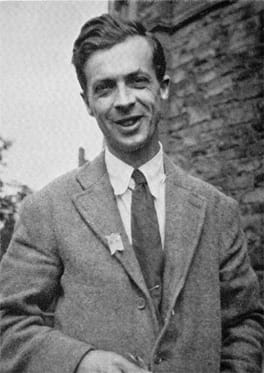
Photo: not given in the source / Public domain (source: Wikimedia Commons)
Julian Huxley was an evolutionary biologist, ethologist and writer. Julian Huxley was born on June 22, 1887 in London, United Kingdom. Death is recorded on February 14, 1975, at the age of 87. Schooling on record includes Balliol College. Listed accolades include Fellow of the Royal Society, Humanist of the Year (1962), Kalinga Prize (1953) and 5 more.
My Take
Julian Huxley stands out to me as a true intellectual giant. An English evolutionary biologist trained at Balliol College, he championed natural selection and helped lead the mid-century modern synthesis that reshaped biology. The sheer weight of his honors, from the Darwin Medal to the Kalinga Prize, signals excellence in both research and public communication. What fascinates me most is his gift for translating difficult science for ordinary readers, a rare talent among scholars. Brother to novelist Aldous Huxley, he carried an extraordinary lineage. Though he died in 1975, his ideas still echo through how we understand life itself, and I find that remarkable.
This take was written by generative AI, one per person, from publicly reported facts (editorial policy). It is a reading of the record, not reporting.
1. Profile
- Name (English)
- Julian Huxley
- Name (Japanese)
- ジュリアン・ハクスリー
- Reading
- じゅりあん・はくすりー
- Born
- June 22, 1887 – February 14, 1975
- Origin
- London, United Kingdom
- Occupation
- evolutionary biologist / ethologist / writer / professor / philosopher
- Zodiac / Chinese zodiac
- Cancer / Boar
2. Background
- University
- Balliol College
Awards & achievements
- Fellow of the Royal Society
- 1962 Humanist of the Year
- 1953 Kalinga Prize
- 1956 Darwin Medal
- 1958 Darwin–Wallace Medal
- 1973 Frink Medal
- 1971 Godman-Salvin Medal
- 1937 Anisfield-Wolf Book Awards
3. Links
4. About this entry
Tags
- Last updated
Facts are limited to publicly available information up to 2024; non-public or unconfirmed items are omitted. English text is machine-assisted (facts translated by Sonnet, "My Take" written by Opus 4.8). The Japanese page is the source of record.
Frequently asked questions
When was Julian Huxley born?
Julian Huxley was born on June 22, 1887.
When did Julian Huxley die?
Julian Huxley died on February 14, 1975, aged 87.
Where was Julian Huxley from?
Julian Huxley was from London, United Kingdom.
What did Julian Huxley do?
Julian Huxley worked as evolutionary biologist, ethologist, writer, professor, philosopher.
Where did Julian Huxley study?
Julian Huxley attended Balliol College.
More people from the United Kingdom → · More people born on June 22 →