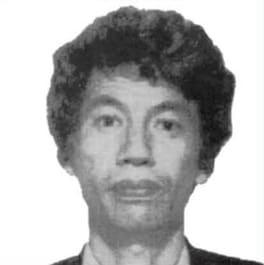
Photo: 警察庁 / CC BY 4.0 (source: Wikimedia Commons)
My Take
Junzo Okudaira is one of the harder names to sit with. A Kyoto University engineering student who somewhere along the way decided that the world's injustices required a gun instead of a ballot, he became one of the core figures of the Japanese Red Army — a group responsible for real deaths of real people, including the 1972 Lod Airport massacre. I don't romanticize any of it. What I keep turning over is the gap: a rigorous technical education, presumably a functioning mind, and yet a path that ended in international fugitive status and decades in hiding. History is full of intelligent people who chose catastrophically wrong. He's a case study in how ideology can convert capability into destruction, and the victims of his actions deserved better than to become footnotes in someone else's revolutionary narrative.
This take was written by generative AI, one per person, from publicly reported facts (editorial policy). It is a reading of the record, not reporting.
Overview
Junzo Okudaira (born February 9, 1949) is a wanted Japanese militant from Shimonoseki, Yamaguchi Prefecture. After studying engineering at Kyoto University, he left Japan on a forged passport in 1974 to join the Japanese Red Army, took part in the 1974 attack on the French embassy in The Hague, and was involved in the 1975 Kuala Lumpur incident.
1. Profile
- Name (English)
- Junzo Okudaira
- Name (Japanese)
- 奥平純三
- Reading
- おくだいら じゅんぞう
- Born
- February 9, 1949 (age 77)
- Origin
- Shimonoseki, Yamaguchi Prefecture, Japan
- Occupation
- Terrorist
- Zodiac / Chinese zodiac
- Aquarius / Ox
2. Background
- University
- Kyoto University, Faculty of Engineering
3. Links
- Wikipedia (Japanese)https://ja.wikipedia.org/wiki/%E5%A5%A5%E5%B9%B3%E7%B4%94%E4%B8%89
- Wikidatahttps://www.wikidata.org/wiki/Q11183569
4. About this entry
Tags
- Last updated
Only publicly available facts are listed; non-public or unconfirmed items are omitted. Base data was compiled from Wikidata from June 2026 onward; ages are recalculated daily and deaths are checked against Wikidata on an ongoing basis. English text is machine-assisted (facts translated by Sonnet, "My Take" written by Opus 4.8). The Japanese page is the source of record.
Frequently asked questions
When was Junzo Okudaira born?
Junzo Okudaira was born on February 9, 1949 and is 77 years old.
Where is Junzo Okudaira from?
Junzo Okudaira is from Shimonoseki, Yamaguchi Prefecture, Japan.
What does Junzo Okudaira do?
Junzo Okudaira works as Terrorist.
Where did Junzo Okudaira study?
Junzo Okudaira attended Kyoto University.