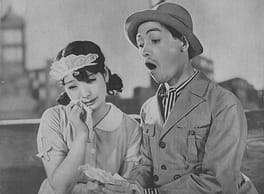
Photo: PCL (vanished film company in 1937) / Public domain (source: Wikimedia Commons)
My Take
I love a great character actor, and Kamatari Fujiwara is exactly the kind I mean. Born in Fukagawa, Tokyo back in 1905, he spent decades being the guy at the edge of the frame who makes the whole scene feel lived-in and real. You'd know him from Kurosawa pictures, where he was the perfect anxious, put-upon everyman, the trembling farmer or the squabbling peasant who somehow steals the moment without ever reaching for the spotlight. He's living proof that you don't need to be the star to be unforgettable. There's something so satisfying about an actor who just shows up, does the work, and quietly racks up a body of films that outlive him. Eighty years on this earth, a craftsman to the end. Plain, salty, human; my favorite kind of screen presence.
This take was written by generative AI, one per person, from publicly reported facts (editorial policy). It is a reading of the record, not reporting.
Overview
Kamatari Fujiwara (January 15, 1905 – December 21, 1985) was a Japanese actor born in Fukagawa, Tokyo. A graduate of Tokyo University of Music, he built a long career spanning the prewar and postwar eras, earning recognition as a skilled character actor. He was awarded the Order of the Sacred Treasure, Fourth Class (Kun-yonto Zuiho-sho) in recognition of his contributions to Japanese performing arts.
1. Profile
- Name (English)
- Kamatari Fujiwara
- Name (Japanese)
- 藤原釜足
- Reading
- ふじわら かまたり
- Born
- January 15, 1905 – December 21, 1985
- Origin
- Fukagawa, Tokyo (formerly Tokyo Prefecture)
- Height
- 156 cm
- Occupation
- Actor
- Zodiac / Chinese zodiac
- Capricorn / Snake
- Active years
- 1933 - 1985
2. Background
- University
- Tokyo University of Music
Awards & achievements
- Order of the Sacred Treasure, Fourth Class (Kun-yonto Zuiho-sho)
3. Links
- Wikipedia (Japanese)https://ja.wikipedia.org/wiki/%E8%97%A4%E5%8E%9F%E9%87%9C%E8%B6%B3
- Wikidatahttps://www.wikidata.org/wiki/Q3043193
4. About this entry
Tags
- Last updated
Only publicly available facts are listed; non-public or unconfirmed items are omitted. Base data was compiled from Wikidata from June 2026 onward; ages are recalculated daily and deaths are checked against Wikidata on an ongoing basis. Works and profile fields sourced from Wikipedia reflect content as of 2026-08-26. English text is machine-assisted (facts translated by Sonnet, "My Take" written by Opus 4.8). The Japanese page is the source of record.
Frequently asked questions
When was Kamatari Fujiwara born?
Kamatari Fujiwara was born on January 15, 1905.
When did Kamatari Fujiwara die?
Kamatari Fujiwara died on December 21, 1985, aged 80.
Where was Kamatari Fujiwara from?
Kamatari Fujiwara was from Fukagawa, Tokyo (formerly Tokyo Prefecture).
What did Kamatari Fujiwara do?
Kamatari Fujiwara worked as Actor.
How tall was Kamatari Fujiwara?
Kamatari Fujiwara was 156 cm tall.
Where did Kamatari Fujiwara study?
Kamatari Fujiwara attended Tokyo University of Music.
When was Kamatari Fujiwara active?
Kamatari Fujiwara was active from 1933 to 1985.