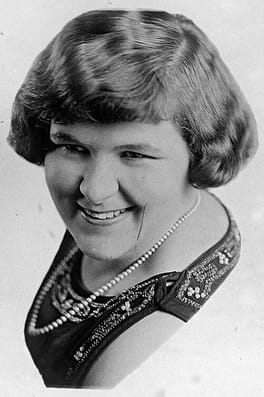
Photo: National Photo Company Collection (Library of Congress) / Public domain (source: Wikimedia Commons)
Kate Smith was born on May 1, 1907 in Greenville, Virginia, United States and was credited as a writer, singer and autobiographer. Kate Smith died on June 17, 1986, aged 79. Schooling on record includes Theodore Roosevelt High School. Listed accolades include Presidential Medal of Freedom (1982) and star on Hollywood Walk of Fame.
My Take
Kate Smith is one of those rare performers whose voice felt like a public utility during hard times. The First Lady of Radio earned that title not through glamour but through a contralto that could steady a nation, and her ownership of "God Bless America" became a piece of American identity itself. What strikes me most is the arc: a Virginia girl who built a career on warmth and reliability, eventually receiving the Presidential Medal of Freedom in 1982. Her legacy is complicated by later reappraisals, but the sheer comfort her singing offered to millions is undeniable. I admire artists who are loved for substance over spectacle, and Smith was exactly that.
This take was written by generative AI, one per person, from publicly reported facts (editorial policy). It is a reading of the record, not reporting.
1. Profile
- Name (English)
- Kate Smith
- Name (Japanese)
- ケイト・スミス
- Reading
- けいと・すみす
- Born
- May 1, 1907 – June 17, 1986
- Origin
- Greenville, Virginia, United States
- Occupation
- writer / singer / autobiographer / television actor / radio personality
- Zodiac / Chinese zodiac
- Taurus / Goat
2. Background
- High school
- Theodore Roosevelt High School
Awards & achievements
- 1982 Presidential Medal of Freedom
- star on Hollywood Walk of Fame
3. Links
- Wikipedia (English)https://en.wikipedia.org/wiki/Kate%20Smith
- Wikipedia (Japanese)https://ja.wikipedia.org/wiki/%E3%82%B1%E3%82%A4%E3%83%88%E3%83%BB%E3%82%B9%E3%83%9F%E3%82%B9
- Wikidatahttps://www.wikidata.org/wiki/Q297442
4. About this entry
Tags
- Last updated
Facts are limited to publicly available information up to 2024; non-public or unconfirmed items are omitted. English text is machine-assisted (facts translated by Sonnet, "My Take" written by Opus 4.8). The Japanese page is the source of record.
Frequently asked questions
When was Kate Smith born?
Born May 1, 1907.
When did Kate Smith die?
Died June 17, 1986, aged 79.
Where was Kate Smith from?
Kate Smith was from Greenville, Virginia, United States.
What did Kate Smith do?
Kate Smith worked as writer, singer, autobiographer, television actor, radio personality.
Writer — see all → · Singer — see all → · More people from the United States →