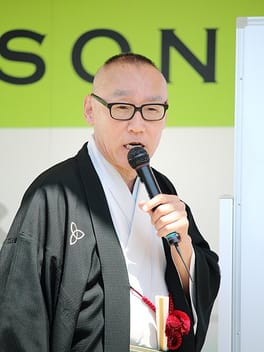
Photo: Ogiyoshisan / CC BY-SA 4.0 (source: Wikimedia Commons)
My Take
I have a real soft spot for guys like Katsura Koeda. He's a trained rakugo storyteller from Nishinomiya who somehow drifted into being one of those comfortable, ever-present faces on Kansai TV, and honestly that mix is the whole charm. Born in 1955, he's got that unhurried, slightly deflated, nothing-to-prove energy that you just can't fake when you're younger. To me he's proof that the real craft is talking, and someone who put in the years learning to hold a room with nothing but words will always be quietly worth watching. No flashy leading-man looks, no big swing for the fences, just a wry guy who never seems to be straining and somehow never bombs. I find that low-key, aged-into-it ease genuinely lovely, and I kind of hope I land there too someday.
This take was written by generative AI, one per person, from publicly reported facts (editorial policy). It is a reading of the record, not reporting.
Overview
Katsura Koeda is a Japanese rakugo performer and television personality born on May 25, 1955, in Nishinomiya, Hyogo Prefecture. Rooted in the traditional art of rakugo, he built a career spanning both the classical storytelling stage and mainstream television, earning long-standing recognition particularly among Kansai audiences. He stands 170 cm tall. Further personal and career details are not publicly available.
1. Profile
- Name (English)
- Katsura Koeda
- Name (Japanese)
- 桂小枝
- Reading
- かつら こえだ
- Born
- May 25, 1955 (age 71)
- Origin
- Nishinomiya, Hyogo Prefecture, Japan
- Height
- 170cm
- Occupation
- Rakugo Performer / Television Personality
- Zodiac / Chinese zodiac
- Gemini / Goat
- Agency
- Yoshimoto Kogyo
- Active years
- 1974 -
2. Works & records
Works summary
- Appearances
- 43
- By year (titles with a known year)
- 2006: 1, year unknown: 42
Filmography / notable works
| Category | Title | Year |
|---|---|---|
| Radio | 日清製粉小枝のお好みサンデー→日清フーズ小枝のオコタコRadio | 2006 |
| TV | 土曜はダメよ! | |
| TV | 歓楽街行進曲 | |
| TV | TV-JACK | |
| TV | 小枝王国 | |
| TV | 探偵!ナイトスクープ | |
| TV | ビショップinナイト月曜・小枝王国 | |
| TV | 合コン!合宿!解放区! | |
| TV | 街かどチャチャチャ | |
| TV | こえぴょんフー!→こえぴょんフー!Z | |
| TV | 愛のコエーダ | |
| TV | 痛快!エブリデイ | |
| TV | 怒涛のくるくるシアター | |
| TV | 超〜お得発見マガジン 小枝のスゴ得 | |
| TV | 泣いたらアカンで通天閣 | |
| TV | トミーズ・小枝の素敵なダーリン | |
| TV | おとなのえほん | |
| TV | 週刊オリラジ経済白書 | |
| TV | 笑点 | |
| TV | おまかせ!小枝ハウジング | |
| TV | オールスター感謝祭 | |
| TV | ふれ愛の旅 | |
| TV | 桂小枝の幸福 | |
| Radio | こんちわコンちゃんお昼ですょ! | |
| Radio | ディスカス! | |
| Radio | 桂小枝のそやから大阪きらいやねん | |
| Radio | おっと!モモンガ | |
| Radio | イエイエサンデー | |
| Radio | 桂小枝のキンコン冠婚 | |
| Radio | 小枝のめちゃええかんじ | |
| PV | さらば碧き面影 | |
| CM | 任天堂 | |
| CM | 桐灰化学 | |
| CM | 尼崎信用金庫 | |
| CM | 大阪ガス | |
| CM | NTT | |
| CM | 大阪府・大阪市 | |
| CM | インテリジェンス | |
| CM | トヨタ自動車 | |
| CM | スマイルタウン・関西住宅販売 | |
| CM | ナビタイム | |
| CM | 江崎グリコ | |
| CM | JR西日本・ICOCA |
3. Links
4. About this entry
Tags
- Last updated
Only publicly available facts are listed; non-public or unconfirmed items are omitted. Base data was compiled from Wikidata from June 2026 onward; ages are recalculated daily and deaths are checked against Wikidata on an ongoing basis. Works and profile fields sourced from Wikipedia reflect content as of 2026-08-26. English text is machine-assisted (facts translated by Sonnet, "My Take" written by Opus 4.8). The Japanese page is the source of record.
Frequently asked questions
When was Katsura Koeda born?
Katsura Koeda was born on May 25, 1955 and is 71 years old.
Where is Katsura Koeda from?
Katsura Koeda is from Nishinomiya, Hyogo Prefecture, Japan.
What does Katsura Koeda do?
Katsura Koeda works as Rakugo Performer, Television Personality.
How tall is Katsura Koeda?
Katsura Koeda is 170 cm tall.
What agency is Katsura Koeda with?
Katsura Koeda is with Yoshimoto Kogyo.
How long has Katsura Koeda been active?
Katsura Koeda has been active since 1974.
What is Katsura Koeda known for?
Katsura Koeda's notable works include TV-JACK, NTT.
Television Personality — see all → · More people from Japan → · More people born on May 25 →