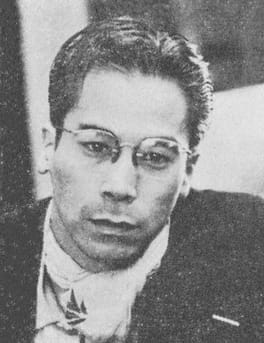
Photo: Unknown author / Public domain (source: Wikimedia Commons)
My Take
Kazuo Yamada is one of those figures who quietly commands respect the more you learn about him. Born in Tokyo in 1912 — in the first months of the Taishō era — he spent his life doing the double shift that few musicians manage convincingly: conducting and composing. That combination matters because it means he wasn't just interpreting other people's ideas, he understood the architecture of music from the inside out. The baton of someone who writes scores hits different. He racked up serious institutional recognition — the Arts Encouragement Prize in 1979, the Japan Art Academy Award in 1986 — the kind of honors that don't go to flash-in-the-pan acts but to people who have earned genuine respect over decades. I never got to hear him conduct in person, obviously, but the image of this Tokyo-born craftsman steering Japanese orchestral music through the upheaval of the war years and into the postwar rebuild is genuinely moving. He passed in 1991, but that kind of quiet, backbone-straight dedication doesn't really disappear.
This take was written by generative AI, one per person, from publicly reported facts (editorial policy). It is a reading of the record, not reporting.
Overview
Kazuo Yamada (October 19, 1912 – August 13, 1991) was a Japanese conductor and composer born in Tokyo. He built a career spanning both podium and composition, earning recognition for his artistic depth across several decades of Japanese musical life. In 1979 he received the Minister of Education's Fine Arts Encouragement Prize (Geijutsu Senjosho), and in 1986 he was awarded the Japan Art Academy Prize (Nihon Geijutsuin Sho), two of the most distinguished honors in Japanese classical music.
1. Profile
- Name (English)
- Kazuo Yamada
- Name (Japanese)
- 山田一雄
- Reading
- やまだ かずお
- Born
- October 19, 1912 – August 13, 1991
- Origin
- Tokyo, Japan
- Occupation
- Conductor / Composer / Musician
- Zodiac / Chinese zodiac
- Libra / Rat
2. Background
Awards & achievements
- 1979 — Fine Arts Encouragement Prize (Geijutsu Senjosho)
- 1986 — Japan Art Academy Prize (Nihon Geijutsuin Sho)
3. Works & records
Works summary
- Appearances
- 66 (1952–1963)
- By year (titles with a known year)
- 1952: 1, 1953: 3, 1954: 2, 1955: 1, 1956: 2, 1958: 1, 1959: 1, 1962: 1, 1963: 1, year unknown: 53
- Debut work
- 親鸞
Filmography / notable works
| Category | Title | Year |
|---|---|---|
| Vocal work | 歌えわれら | 1963 |
| Notable orchestral works | 東北民謡 | 1962 |
| Vocal work | わが皇子とわが妃 | 1959 |
| Vocal work | 同人名簿 | 1958 |
| Notable orchestral works | 名人 | 1956 |
| Vocal work | 蜂のうた | 1956 |
| Vocal work | サロメの月 | 1955 |
| Notable orchestral works | あなたにはきこえませんか | 1954 |
| Vocal work | 貧しき贈物 | 1954 |
| Vocal work | 柳ちる町 | 1953 |
| Vocal work | 幼なき歌抄 | 1953 |
| Vocal work | 遥かな花 | 1953 |
| Notable orchestral works | 親鸞 | 1952 |
| Notable orchestral works | 白夜 | |
| Notable orchestral works | 交響的木曽 | |
| Notable orchestral works | 印度 | |
| Notable orchestral works | 荘厳なる祭典 | |
| Notable orchestral works | 呪縛 | |
| Notable orchestral works | 嬉遊曲 | |
| Notable orchestral works | 皇軍頌歌 | |
| Notable orchestral works | バリ島の月 | |
| Notable orchestral works | おほむたから Op.20 | |
| Notable orchestral works | 戦列にOp.22 | |
| Notable orchestral works | 二つの慰安曲 | |
| Notable orchestral works | 奈良 | |
| ヴァイオリンソナタOp.15 | ||
| 無伴奏チェロソナタOp.10 | ||
| 弦楽四重奏曲第1番ハ調 | ||
| 彼の随感から | ||
| 3つの古典的な断章 | ||
| 若者のうたえる歌 | ||
| エレガンス | ||
| 2つのエレガンスより | ||
| 二つの唄 | ||
| 麦踏み | ||
| リ々子のために | ||
| インテルメデ | ||
| 闘争―短詩 | ||
| Shizukaに捧ぐ | ||
| 樹と性欲 | ||
| 一つの感想 | ||
| アンプロヴィザシオン | ||
| ソナチネ Op. 19 | ||
| ノットゥルノ Op. 23 | ||
| Vocal work | くちづけ | |
| Vocal work | 幽思 | |
| Vocal work | 白壁 | |
| Vocal work | 春の朝 | |
| Vocal work | 樺太の越年 | |
| Vocal work | コクトオ三題 | |
| Vocal work | 猫 | |
| Vocal work | 辮髪時代から・寓話 | |
| Vocal work | 春宵語 | |
| Vocal work | 午後 | |
| Vocal work | 四季の歌 | |
| Vocal work | 溝 | |
| Vocal work | 小さな小さなクリスマス | |
| Vocal work | 三つの季節のうた |
4. Links
- Wikipedia (Japanese)https://ja.wikipedia.org/wiki/%E5%B1%B1%E7%94%B0%E4%B8%80%E9%9B%84
- Wikidatahttps://www.wikidata.org/wiki/Q6381680
5. About this entry
Tags
- Last updated
Facts are limited to publicly available information up to 2024; non-public or unconfirmed items are omitted. Works and profile fields sourced from Wikipedia reflect content as of 2026-08-26. English text is machine-assisted (facts translated by Sonnet, "My Take" written by Opus 4.8). The Japanese page is the source of record.
Frequently asked questions
When was Kazuo Yamada born?
Kazuo Yamada was born on October 19, 1912.
When did Kazuo Yamada die?
Kazuo Yamada died on August 13, 1991, aged 78.
Where was Kazuo Yamada from?
Kazuo Yamada was from Tokyo, Japan.
What did Kazuo Yamada do?
Kazuo Yamada worked as Conductor, Composer, Musician.
Conductor — see all → · Composer — see all → · More people from Japan → · More people born on October 19 →