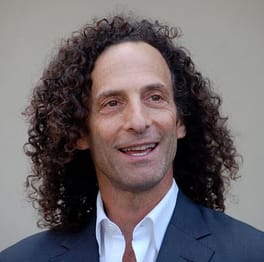
Photo: Angela George / CC BY-SA 3.0 (source: Wikimedia Commons)
Born on June 5, 1956 in Seattle, Washington, United States, Kenny G is a saxophonist, composer and jazz musician. As of 2026, Kenny G is 70 years old. Education on record includes Franklin High School and University of Washington. Recorded honors include Grammy Awards and star on Hollywood Walk of Fame.
My Take
Kenny G is genuinely one of the most divisive figures in modern music, and honestly? I'm kind of here for it. The man sold over 75 million records as an instrumentalist — let that sink in — at a time when instrumental albums were basically supposed to be background noise at dentist offices. His 1986 album Duotones put smooth jazz on the map in a way nobody had managed before, and "Songbird" became one of those melodies that just lives in your brain permanently whether you invited it or not. Critics have spent decades dunking on him, but Kenny G laughed all the way to a Hollywood Walk of Fame star and a Grammy. The Seattle kid who studied accounting at the University of Washington before following his soprano sax into global stardom is proof that pure, unabashed accessibility can be its own kind of art form.
This take was written by generative AI, one per person, from publicly reported facts (editorial policy). It is a reading of the record, not reporting.
1. Profile
- Name (English)
- Kenny G
- Name (Japanese)
- ケニー・G
- Reading
- けにー・G
- Born
- June 5, 1956 (age 70)
- Origin
- Seattle, Washington, United States
- Occupation
- saxophonist / composer / jazz musician / musician
- Zodiac / Chinese zodiac
- Gemini / Monkey
2. Background
- High school
- Franklin High School
- University
- University of Washington
Awards & achievements
- Grammy Awards
- star on Hollywood Walk of Fame
3. Links
- Official sitehttps://www.kennyg.com/
- Instagramhttps://www.instagram.com/kennyg/
- Xhttps://x.com/kennyg
- Wikipedia (English)https://en.wikipedia.org/wiki/Kenny%20G
- Wikipedia (Japanese)https://ja.wikipedia.org/wiki/%E3%82%B1%E3%83%8B%E3%83%BC%E3%83%BBG
- Wikidatahttps://www.wikidata.org/wiki/Q295777
4. About this entry
Tags
- Last updated
Only publicly available facts are listed; non-public or unconfirmed items are omitted. Base data was compiled from Wikidata from June 2026 onward; ages are recalculated daily and deaths are checked against Wikidata on an ongoing basis. English text is machine-assisted (facts translated by Sonnet, "My Take" written by Opus 4.8). The Japanese page is the source of record.
Frequently asked questions
When was Kenny G born?
Kenny G was born on June 5, 1956 and is 70 years old.
Where is Kenny G from?
Kenny G is from Seattle, Washington, United States.
What does Kenny G do?
Kenny G works as saxophonist, composer, jazz musician, musician.
Where did Kenny G study?
Kenny G attended University of Washington.
Saxophonist — see all → · Composer — see all → · More people from the United States → · More people born on June 5 →