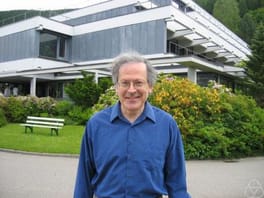
Photo: Schmid, Renate / CC BY-SA 2.0 de (source: Wikimedia Commons)
Leslie Valiant was born in Budapest, Hungary on March 28, 1949. Public records list Leslie Valiant as a computer scientist, university teacher and mathematician. The age as of 2026 is 77. Schooling on record includes Imperial College London. Awards on record include Guggenheim Fellowship (1985), Fellow of the Royal Society, Turing Award (2010) and 5 more.
My Take
Leslie Valiant is one of those figures whose influence vastly outsizes his public fame. Born in Budapest to a chemical engineer and a translator, he won the Turing Award for theoretical work that quietly underpins how we think about machine learning today. His framework for what it means to learn something approximately well sits at the distant headwaters of the modern AI boom. Now a Harvard professor, he never sought celebrity, yet he helped expand our understanding of computation and learning itself. I find that kind of deep, foundational contribution far more thrilling than any viral moment.
This take was written by generative AI, one per person, from publicly reported facts (editorial policy). It is a reading of the record, not reporting.
1. Profile
- Name (English)
- Leslie Valiant
- Name (Japanese)
- レスリー・ヴァリアント
- Reading
- れすりー・ゔぁりあんと
- Born
- March 28, 1949 (age 77)
- Origin
- Budapest, Hungary
- Occupation
- computer scientist / university teacher / mathematician
- Zodiac / Chinese zodiac
- Aries / Ox
2. Background
- University
- Imperial College London
Awards & achievements
- 1985 Guggenheim Fellowship
- Fellow of the Royal Society
- 2010 Turing Award
- 1997 Knuth Prize
- 2008 EATCS award
- 1986 IMU Abacus Medal
- 1986 O'Reilly Open Source Award
- 2012 ACM Fellow
3. Links
- Official sitehttp://people.deas.harvard.edu/~valiant/
- Wikipedia (English)https://en.wikipedia.org/wiki/Leslie%20Valiant
- Wikipedia (Japanese)https://ja.wikipedia.org/wiki/%E3%83%AC%E3%82%B9%E3%83%AA%E3%83%BC%E3%83%BB%E3%83%B4%E3%82%A1%E3%83%AA%E3%82%A2%E3%83%B3%E3%83%88
- Wikidatahttps://www.wikidata.org/wiki/Q93154
4. About this entry
Tags
- Last updated
Facts are limited to publicly available information up to 2024; non-public or unconfirmed items are omitted. English text is machine-assisted (facts translated by Sonnet, "My Take" written by Opus 4.8). The Japanese page is the source of record.
Frequently asked questions
When was Leslie Valiant born?
Born March 28, 1949 (age 77).
Where is Leslie Valiant from?
Leslie Valiant is from Budapest, Hungary.
What does Leslie Valiant do?
Leslie Valiant works as computer scientist, university teacher, mathematician.
Computer scientist — see all → · University teacher — see all → · More people from Hungary →