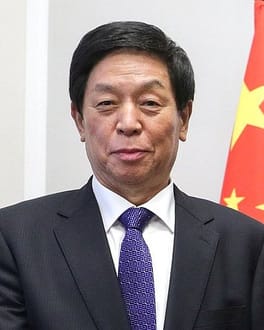
Photo: duma.gov.ru / CC BY 4.0 (source: Wikimedia Commons)
Born on August 30, 1950 in Pingshan County, Hebei, People's Republic of China, Li Zhanshu is a politician. Li Zhanshu is 76 years old as of 2026. Education on record includes Hebei Normal University. Recorded honors include Order of Friendship.
My Take
Li Zhanshu is a reminder that some of the most powerful people are the least theatrical. He chaired the Standing Committee of the National People's Congress from 2018 to 2023 and ranked third in the Communist Party's Politburo Standing Committee, China's top decision-making body, between 2017 and 2022. That's the apex of state lawmaking, the opposite of a camera-chasing celebrity. He even received Russia's Order of Friendship, hinting at a role in high diplomacy. I find it sobering that a single word from a figure like this moves a nation. The unglamorous machinery of power, embodied by someone who spent a career inside it.
This take was written by generative AI, one per person, from publicly reported facts (editorial policy). It is a reading of the record, not reporting.
1. Profile
- Name (English)
- Li Zhanshu
- Name (Japanese)
- 栗戦書
- Reading
- りつ・せんしょ
- Born
- August 30, 1950 (age 76)
- Origin
- Pingshan County, Hebei, People's Republic of China
- Occupation
- politician
- Zodiac / Chinese zodiac
- Virgo / Tiger
2. Background
- University
- Hebei Normal University
Awards & achievements
- Order of Friendship
3. Links
- Wikipedia (English)https://en.wikipedia.org/wiki/Li%20Zhanshu
- Wikipedia (Japanese)https://ja.wikipedia.org/wiki/%E6%A0%97%E6%88%A6%E6%9B%B8
- Wikidatahttps://www.wikidata.org/wiki/Q391443
4. About this entry
Tags
- Last updated
Facts are limited to publicly available information up to 2024; non-public or unconfirmed items are omitted. English text is machine-assisted (facts translated by Sonnet, "My Take" written by Opus 4.8). The Japanese page is the source of record.
Frequently asked questions
When was Li Zhanshu born?
Li Zhanshu was born on August 30, 1950 and is 76 years old.
Where is Li Zhanshu from?
Li Zhanshu is from Pingshan County, Hebei, People's Republic of China.
What does Li Zhanshu do?
Li Zhanshu works as politician.
Where did Li Zhanshu study?
Li Zhanshu attended Hebei Normal University.
Politician — see all → · More people from the People's Republic of China → · More people born on August 30 →