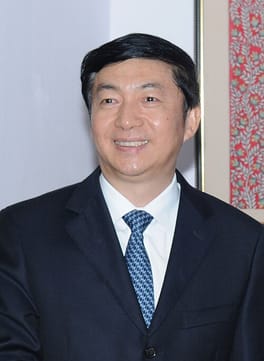
Photo: Ministry of Commerce and Industry (India) / GODL-India (source: Wikimedia Commons)
Luo Huining, born on October 5, 1954 in Dangtu County, People's Republic of China, is a politician and economist. Luo Huining is 71 years old as of 2026. Education on record includes Anhui University.
My Take
Luo Huining sits at a remarkable intersection of power and history. An economist by training who rose to govern Qinghai and Shanxi before heading the Liaison Office in Hong Kong, he is the sort of administrator whose career reads like a map of modern Chinese governance. I won't pretend to adjudicate the politics, but the sheer competence required to navigate roles of that magnitude is undeniable. What interests me most is how figures like him will be judged by history rather than the headlines of their moment. He's a reminder that some of the most consequential lives are lived in the machinery, not the spotlight.
This take was written by generative AI, one per person, from publicly reported facts (editorial policy). It is a reading of the record, not reporting.
1. Profile
- Name (English)
- Luo Huining
- Name (Japanese)
- 駱恵寧
- Reading
- らく・けいねい
- Born
- October 5, 1954 (age 71)
- Origin
- Dangtu County, People's Republic of China
- Occupation
- politician / economist
- Zodiac / Chinese zodiac
- Libra / Horse
2. Background
- University
- Anhui University
3. Links
- Wikipedia (English)https://en.wikipedia.org/wiki/Luo%20Huining
- Wikipedia (Japanese)https://ja.wikipedia.org/wiki/%E9%A7%B1%E6%81%B5%E5%AF%A7
- Wikidatahttps://www.wikidata.org/wiki/Q1652530
4. About this entry
Tags
- Last updated
Facts are limited to publicly available information up to 2024; non-public or unconfirmed items are omitted. English text is machine-assisted (facts translated by Sonnet, "My Take" written by Opus 4.8). The Japanese page is the source of record.
Frequently asked questions
When was Luo Huining born?
Born October 5, 1954 (age 71).
Where is Luo Huining from?
Luo Huining is from Dangtu County, People's Republic of China.
What does Luo Huining do?
Luo Huining works as politician, economist.
Politician — see all → · Economist — see all → · More people from the People's Republic of China →