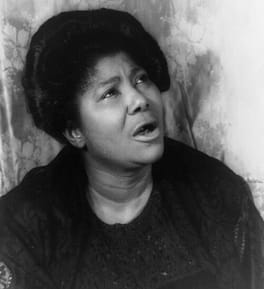
Photo: Carl Van Vechten / Public domain (source: Wikimedia Commons)
Mahalia Jackson was born on October 26, 1911 in New Orleans, Louisiana, United States. Mahalia Jackson was listed as a gospel singer, musician and religious leader. Death is recorded on January 27, 1972, at the age of 60. Listed accolades include Grammy Lifetime Achievement Award (1972), Gospel Music Hall of Fame, Grammy Award for Best Inspirational Performance (1961) and 3 more.
My Take
Mahalia Jackson is, for me, the rare artist whose accolades almost feel beside the point. The Grammy Lifetime Achievement, the Rock and Roll Hall of Fame, the Walk of Fame star, all earned, yet what moves me is the sheer conviction in her voice. Born in New Orleans in 1911, she didn't just sing gospel, she carried it into Black churches across America and made it a force in the civil rights era. I find her one of the most quietly powerful figures of the twentieth century. She convinces me that a song can be a prayer, and that belief, sung loudly enough, can move a nation.
This take was written by generative AI, one per person, from publicly reported facts (editorial policy). It is a reading of the record, not reporting.
1. Profile
- Name (English)
- Mahalia Jackson
- Name (Japanese)
- マヘリア・ジャクソン
- Reading
- まへりあ・じゃくそん
- Born
- October 26, 1911 – January 27, 1972
- Origin
- New Orleans, Louisiana, United States
- Occupation
- gospel singer / musician / religious leader / singer
- Zodiac / Chinese zodiac
- Scorpio / Boar
2. Background
Awards & achievements
- 1972 Grammy Lifetime Achievement Award
- Gospel Music Hall of Fame
- 1961 Grammy Award for Best Inspirational Performance
- star on Hollywood Walk of Fame
- 1997 Rock and Roll Hall of Fame
- 1967 Order of Lincoln
3. Links
- Official sitehttp://www.mahaliajackson.us
- Wikipedia (English)https://en.wikipedia.org/wiki/Mahalia%20Jackson
- Wikipedia (Japanese)https://ja.wikipedia.org/wiki/%E3%83%9E%E3%83%98%E3%83%AA%E3%82%A2%E3%83%BB%E3%82%B8%E3%83%A3%E3%82%AF%E3%82%BD%E3%83%B3
- Wikidatahttps://www.wikidata.org/wiki/Q206466
4. About this entry
Tags
- Last updated
Facts are limited to publicly available information up to 2024; non-public or unconfirmed items are omitted. English text is machine-assisted (facts translated by Sonnet, "My Take" written by Opus 4.8). The Japanese page is the source of record.
Frequently asked questions
When was Mahalia Jackson born?
Mahalia Jackson was born on October 26, 1911.
When did Mahalia Jackson die?
Mahalia Jackson died on January 27, 1972, aged 60.
Where was Mahalia Jackson from?
Mahalia Jackson was from New Orleans, Louisiana, United States.
What did Mahalia Jackson do?
Mahalia Jackson worked as gospel singer, musician, religious leader, singer.
Musician — see all → · More people from the United States → · More people born on October 26 →