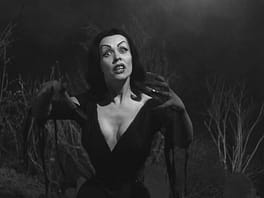
Photo: The original uploader was One Salient Oversight at English Wikipedia. Later versions were uploaded by Ibaranoff24 at en.wikipedia. / Public domain (source: Wikimedia Commons)
Maila Nurmi was born in Gloucester, Massachusetts, United States on December 11, 1922. Public records list Maila Nurmi as a film actor and television actor. Death is recorded on January 10, 2008, at the age of 85. Education on record includes Astoria High School.
My Take
Maila Nurmi fascinates me because she essentially invented a template that the entire horror-host and goth aesthetic still borrows from. Creating Vampira in the 1950s, she took a campy late-night TV character and turned it into something genuinely iconic, which is no small feat in an era that rarely let women define their own image. I find it grounding that before any of that she was a Finnish-American kid working tuna and salmon canneries in Astoria, Oregon, then gambling on Los Angeles in 1940. That blue-collar starting point makes the reinvention feel earned rather than handed to her. Her cultural fingerprint far outlasted her actual screen time.
This take was written by generative AI, one per person, from publicly reported facts (editorial policy). It is a reading of the record, not reporting.
1. Profile
- Name (English)
- Maila Nurmi
- Name (Japanese)
- ヴァンパイラ
- Reading
- ゔぁんぱいら
- Born
- December 11, 1922 – January 10, 2008
- Origin
- Gloucester, Massachusetts, United States
- Occupation
- film actor / television actor
- Zodiac / Chinese zodiac
- Sagittarius / Dog
2. Background
- High school
- Astoria High School
3. Links
- Official sitehttps://www.vampirasattic.com/
- Wikipedia (English)https://en.wikipedia.org/wiki/Maila%20Nurmi
- Wikipedia (Japanese)https://ja.wikipedia.org/wiki/%E3%83%A1%E3%82%A4%E3%83%A9%E3%83%BB%E3%83%8C%E3%83%AB%E3%83%9F
- Wikidatahttps://www.wikidata.org/wiki/Q237813
4. About this entry
Tags
- Last updated
Facts are limited to publicly available information up to 2024; non-public or unconfirmed items are omitted. English text is machine-assisted (facts translated by Sonnet, "My Take" written by Opus 4.8). The Japanese page is the source of record.
Frequently asked questions
When was Maila Nurmi born?
Born December 11, 1922.
When did Maila Nurmi die?
Died January 10, 2008, aged 85.
Where was Maila Nurmi from?
Maila Nurmi was from Gloucester, Massachusetts, United States.
What did Maila Nurmi do?
Maila Nurmi worked as film actor, television actor.
Film actor — see all → · Television actor — see all → · More people from the United States →