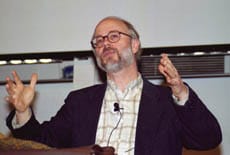
Photo: Campus Photo • Bryan Matluk / CC BY-SA 3.0 (source: Wikimedia Commons)
Michael Behe is listed as a biochemist, university teacher and writer. Michael Behe was born in Altoona, Pennsylvania, United States on January 18, 1952. The age as of 2026 is 74. Education on record includes Bishop McDevitt High School and University of Pennsylvania.
My Take
Behe fascinates me less for his science than for his stubbornness. A genuinely credentialed biochemist from Altoona with a University of Pennsylvania pedigree, he chose to plant his flag on intelligent design, a position the scientific mainstream firmly rejects. I don't buy the argument, and I think the consensus against it is well earned. Yet there's something I find oddly compelling about a man who spends a career inviting fire rather than coasting on the safe majority view. Figures who provoke sustained debate, even wrongheaded ones, tend to leave a mark. He certainly forced people to articulate why he was wrong.
This take was written by generative AI, one per person, from publicly reported facts (editorial policy). It is a reading of the record, not reporting.
1. Profile
- Name (English)
- Michael Behe
- Name (Japanese)
- マイケル・ベーエ
- Reading
- まいける・べーえ
- Born
- January 18, 1952 (age 74)
- Origin
- Altoona, Pennsylvania, United States
- Occupation
- biochemist / university teacher / writer / chemist
- Zodiac / Chinese zodiac
- Capricorn / Dragon
2. Background
- High school
- Bishop McDevitt High School
- University
- University of Pennsylvania
3. Links
- Wikipedia (English)https://en.wikipedia.org/wiki/Michael%20Behe
- Wikipedia (Japanese)https://ja.wikipedia.org/wiki/%E3%83%9E%E3%82%A4%E3%82%B1%E3%83%AB%E3%83%BB%E3%83%99%E3%83%BC%E3%82%A8
- Wikidatahttps://www.wikidata.org/wiki/Q368363
4. About this entry
Tags
- Last updated
Facts are limited to publicly available information up to 2024; non-public or unconfirmed items are omitted. English text is machine-assisted (facts translated by Sonnet, "My Take" written by Opus 4.8). The Japanese page is the source of record.
Frequently asked questions
When was Michael Behe born?
Born January 18, 1952 (age 74).
Where is Michael Behe from?
Michael Behe is from Altoona, Pennsylvania, United States.
What does Michael Behe do?
Michael Behe works as biochemist, university teacher, writer, chemist.
Biochemist — see all → · University teacher — see all → · More people from the United States →