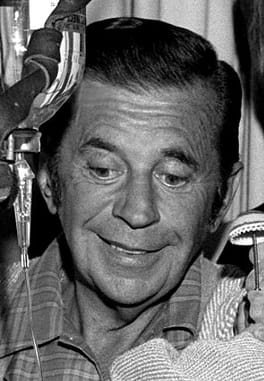
Photo: Unknown author / Public domain (source: Wikimedia Commons)
Morey Amsterdam, born on December 14, 1908 in Chicago, Illinois, United States, was a cellist, television actor and radio personality. Morey Amsterdam died on October 28, 1996, aged 87. Recorded honors include star on Hollywood Walk of Fame (1960).
My Take
Morey Amsterdam is the sort of mid-century entertainer I find quietly remarkable. A Chicago-born comedian who could actually play the cello, he worked his way through radio, wrote material, hosted his own early television show, and landed a lasting role as Buddy Sorrell on The Dick Van Dyke Show. That span covers the entire turbulent reinvention of American entertainment, and he stayed employable through all of it by leaning on both wit and genuine musicianship. His star on the Hollywood Walk of Fame feels earned. I respect performers who survive technological upheaval through sheer versatility, and he clearly did.
This take was written by generative AI, one per person, from publicly reported facts (editorial policy). It is a reading of the record, not reporting.
1. Profile
- Name (English)
- Morey Amsterdam
- Name (Japanese)
- モーリー・アムステルダム
- Reading
- もーりー・あむすてるだむ
- Born
- December 14, 1908 – October 28, 1996
- Origin
- Chicago, Illinois, United States
- Occupation
- actor / cellist / television actor / radio personality / screenwriter
- Zodiac / Chinese zodiac
- Sagittarius / Monkey
2. Background
Awards & achievements
- 1960 star on Hollywood Walk of Fame
3. Links
- Wikipedia (English)https://en.wikipedia.org/wiki/Morey%20Amsterdam
- Wikidatahttps://www.wikidata.org/wiki/Q3323951
4. About this entry
Tags
- Last updated
Facts are limited to publicly available information up to 2024; non-public or unconfirmed items are omitted. English text is machine-assisted (facts translated by Sonnet, "My Take" written by Opus 4.8). The Japanese page is the source of record.
Frequently asked questions
When was Morey Amsterdam born?
Morey Amsterdam was born on December 14, 1908.
When did Morey Amsterdam die?
Morey Amsterdam died on October 28, 1996, aged 87.
Where was Morey Amsterdam from?
Morey Amsterdam was from Chicago, Illinois, United States.
What did Morey Amsterdam do?
Morey Amsterdam worked as actor, cellist, television actor, radio personality, screenwriter.
Actor — see all → · Cellist — see all → · More people from the United States → · More people born on December 14 →