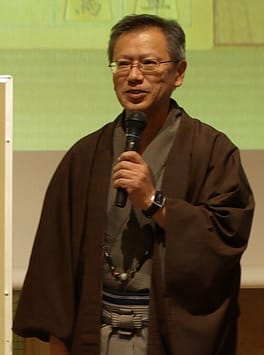
Photo: Pooh456 / CC BY-SA 4.0 (source: Wikimedia Commons)
My Take
Honestly, professional shogi isn't something I follow closely, but Osamu Nakamura is the kind of guy who makes you respect the game just by existing in it. Born in 1962 in Machida, Tokyo, he's been at this for over four decades — that alone is a career most people in any field couldn't manage. Winning the Shogi Eiryo Award in 2006 signals sustained excellence over the long haul, not a flash-in-the-pan run. The shogi world has always had this thing where veterans don't fade out, they just keep going, and Nakamura fits that mold perfectly. I can't tell you how many moves ahead he reads — it's probably a number that would make my brain short-circuit — but the fact that he's been doing it at the highest level for this long says everything. Quiet, methodical, deep. A career built on patience rather than spectacle, and there's something genuinely cool about that.
This take was written by generative AI, one per person, from publicly reported facts (editorial policy). It is a reading of the record, not reporting.
Overview
Osamu Nakamura is a professional shogi player born on November 7, 1962, in Machida, Tokyo, Japan. He has maintained a career spanning more than four decades in the world of competitive shogi. In 2006, he received the Shogi Eiryo-sho (Shogi Honor Award), recognizing sustained excellence over a long professional career.
1. Profile
- Name (English)
- Osamu Nakamura
- Name (Japanese)
- 中村修
- Reading
- なかむら おさむ
- Born
- November 7, 1962 (age 63)
- Origin
- Machida, Tokyo, Japan
- Occupation
- Professional Shogi Player
- Zodiac / Chinese zodiac
- Scorpio / Tiger
2. Background
Awards & achievements
- 2006 — Shogi Eiryo-sho (Shogi Honor Award)
3. Links
4. About this entry
Tags
- Last updated
Only publicly available facts are listed; non-public or unconfirmed items are omitted. Base data was compiled from Wikidata from June 2026 onward; ages are recalculated daily and deaths are checked against Wikidata on an ongoing basis. English text is machine-assisted (facts translated by Sonnet, "My Take" written by Opus 4.8). The Japanese page is the source of record.
Frequently asked questions
When was Osamu Nakamura born?
Osamu Nakamura was born on November 7, 1962 and is 63 years old.
Where is Osamu Nakamura from?
Osamu Nakamura is from Machida, Tokyo, Japan.
What does Osamu Nakamura do?
Osamu Nakamura works as Professional Shogi Player.