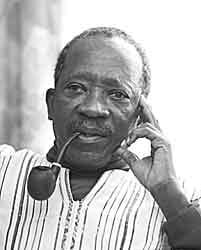
Photo: Günter Prust / CC BY 3.0 (source: Wikimedia Commons)
Ousmane Sembène was a film director, film producer and actor. Ousmane Sembène was born on January 1, 1923 in Ziguinchor, Ziguinchor Department, Senegal. Death is recorded on June 9, 2007, at the age of 84. Awards on record include Officer of the Legion of Honour (2006), Carrosse d'or (2005), Prix Jean Vigo (1966) and 3 more. Credited works include God's Bits of Wood, Black Girl and Mandabi.
My Take
Ousmane Sembène earns the title "father of African cinema" in full, and I find his career genuinely moving. A Senegalese filmmaker who trained in Moscow, he chose to tell his own people's stories in their own languages, confronting colonial wounds and entrenched custom in films like Black Girl, Xala and Moolaadé. His was never escapist work; it was cinema with a conscience. The honors he gathered, from the Legion of Honour to the Carrosse d'or, only confirm what the films already prove. To me, no one better embodies the dignity of a people authoring their own narrative on screen.
This take was written by generative AI, one per person, from publicly reported facts (editorial policy). It is a reading of the record, not reporting.
1. Profile
- Name (English)
- Ousmane Sembène
- Name (Japanese)
- センベーヌ・ウスマン
- Reading
- せんべーぬ・うすまん
- Born
- January 1, 1923 – June 9, 2007
- Origin
- Ziguinchor, Ziguinchor Department, Senegal
- Occupation
- film director / film producer / actor / playwright / screenwriter
- Zodiac / Chinese zodiac
- Capricorn / Boar
2. Background
Awards & achievements
- 2006 Officer of the Legion of Honour
- 2005 Carrosse d'or
- 1966 Prix Jean Vigo
- 2004 Un Certain Regard
- 1997 Grand prix littéraire en poésie d'Afrique noire
- 1966 Tanit d'or
3. Works & records
Filmography / notable works
| Category | Title |
|---|---|
| Notable work | God's Bits of Wood |
| Notable work | Black Girl |
| Notable work | Mandabi |
| Notable work | Xala |
| Notable work | Ceddo |
| Notable work | Moolaadé |
4. Links
5. About this entry
Tags
- Last updated
Facts are limited to publicly available information up to 2024; non-public or unconfirmed items are omitted. English text is machine-assisted (facts translated by Sonnet, "My Take" written by Opus 4.8). The Japanese page is the source of record.
Frequently asked questions
When was Ousmane Sembène born?
Born January 1, 1923.
When did Ousmane Sembène die?
Died June 9, 2007, aged 84.
Where was Ousmane Sembène from?
Ousmane Sembène was from Ziguinchor, Ziguinchor Department, Senegal.
What did Ousmane Sembène do?
Ousmane Sembène worked as film director, film producer, actor, playwright, screenwriter.
What was Ousmane Sembène known for?
Notable works include God's Bits of Wood, Black Girl, Mandabi.
Film director — see all → · Film producer — see all → · More people from Senegal →